Contribuer au contenu ou vous faire connaître à l’Afrique et sa diaspora ? Contactez-nous ! Want to contribute content or promote yourself to Africa and its diaspora? Contact us!
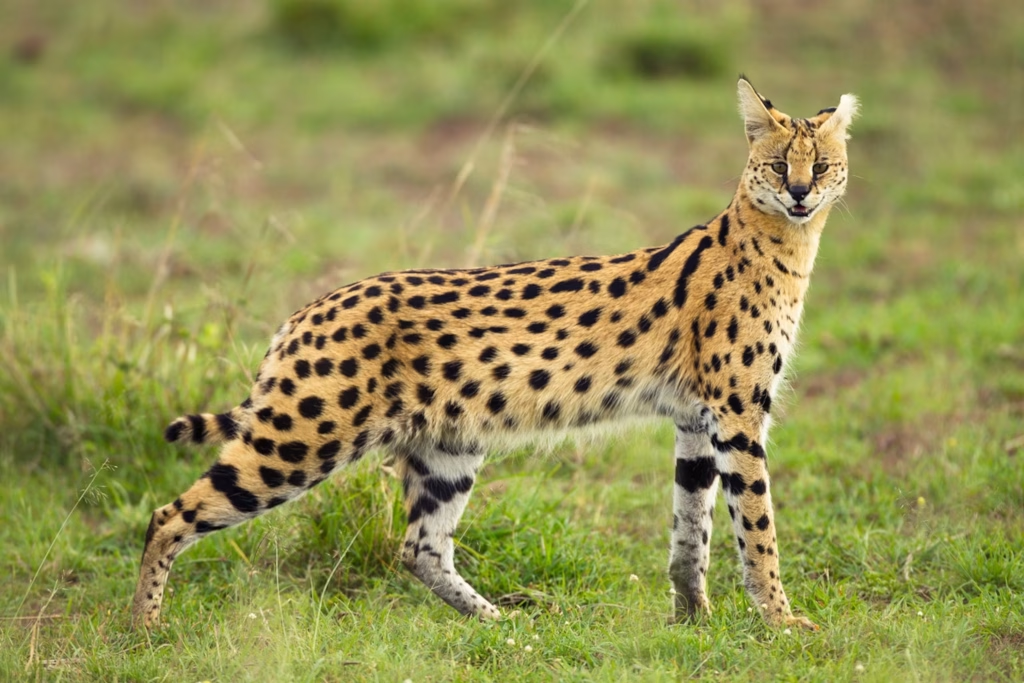
Serval: The Long-Legged “Leopard in Miniature” with Enormous Ears

Common Name(s): Serval, Tierboskat (Afrikaans for “bush cat”)
Scientific Name: Leptailurus serval
Type: Mammal – Carnivore (Felidae family) – Specialist predator
Origin and Distribution: Native to sub-Saharan Africa. Widespread from Senegal and Ethiopia south to South Africa, though absent from dense rainforests and extreme deserts. Most common in East and Southern Africa.
Habitat: Tall grasslands, reed beds, riverine areas, and savanna-woodland mosaics with good cover and water. Prefers areas with dense vegetation for stalking and high rodent populations.
Physical Description: Slender, medium-sized cat: 54–62 cm shoulder height, 9–18 kg (males larger). Striking golden-yellow coat with bold black spots and stripes (similar to a small leopard). Most distinctive features: extremely long legs (for jumping high) and huge, rounded ears (largest relative to body size among cats). Short tail with black rings and tip; black-backed ears with white spots on the back.
History and Cultural Significance: Often overlooked compared to big cats, but admired by safari guides for its beauty and hunting skill. In some cultures associated with agility and grace. Popular in wildlife documentaries for its dramatic pouncing style.
Behavior and Lifestyle: Mostly crepuscular/nocturnal but active in daylight in protected areas. Exceptional hunter — uses huge ears to locate rodents and birds by sound, then leaps up to 3 m high to pounce. Diet: mainly small mammals (rats, mice), birds, frogs, insects, and occasionally young antelope. Solitary except during mating; females raise 2–4 kittens in hidden dens. Excellent jumper and swimmer.
Conservation Status and Threats: Least Concern (IUCN) overall, but declining in some regions due to habitat loss (wetland drainage), road kills, and persecution (sometimes seen as poultry predators). Benefits from protected wetlands and grasslands.
Fun Facts / Did You Know? • Can leap 3 metres into the air to catch birds or rodents mid-flight — one of the highest jumps of any cat. • Ears act like radar dishes — can pinpoint prey sounds from tall grass. • Long legs evolved for hunting in tall vegetation, not speed like cheetahs. • Black-backed ears have white “eye spots” that may confuse predators when the serval looks backward. • One of the most efficient hunters among wild cats — success rate up to 50% in good conditions.
Best Places to See It in the Wild: Maasai Mara (Kenya — excellent daytime sightings), Serengeti (Tanzania), Kruger National Park (South Africa), Okavango Delta (Botswana), Hluhluwe-iMfolozi Park (South Africa).
Sources & Further Reading:
- IUCN Red List: Leptailurus serval
- African Wildlife Foundation
- Panthera (small cat conservation)
- Safari ecology guides