Contribuer au contenu ou vous faire connaître à l’Afrique et sa diaspora ? Contactez-nous ! Want to contribute content or promote yourself to Africa and its diaspora? Contact us!
Sausage Tree: The African Giant with Fruits That Hang Like Massive Sausages


Common Name(s):
Sausage Tree, Cucumber Tree, Worsboom (Afrikaans)
Scientific Name:
Kigelia africana
Plant Type:
Semi-deciduous tree
Family:
Bignoniaceae
Origin and Endemism:
Native exclusively to sub-Saharan Africa; the only species in its genus.
Natural Distribution:
Widespread across tropical Africa, from Senegal and Ethiopia south to South Africa, including countries like Tanzania, Zambia, Zimbabwe, Botswana, and Namibia. Common along rivers and in open woodlands.
Habitat & Growing Conditions:
Prefers riverine areas, floodplains, open woodlands, and hot lowlands with seasonal rainfall (500–1,500 mm annually). Tolerates a wide range of soils but thrives near water sources; altitudes up to 1,800 m.
Physical Description:
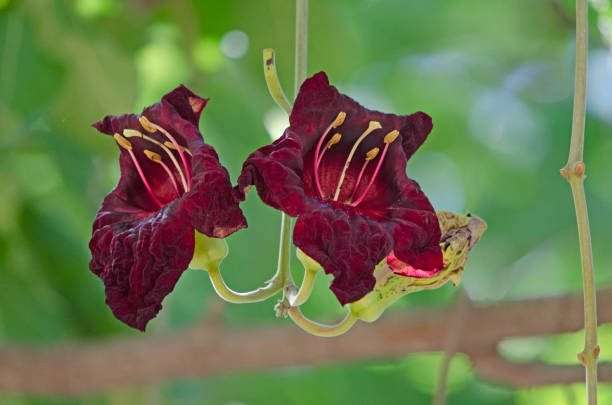
Medium to large tree reaching 10–25 m tall with a spreading crown. Bark grey and smooth when young, becoming rough with age. Leaves pinnate with 6–10 leaflets. Striking maroon-red, bell-shaped flowers (up to 15 cm long) in long, hanging sprays. Fruits are extraordinary: woody, sausage-like pods up to 1 m long and 18 cm wide, weighing 5–10 kg, hanging on long rope-like stalks.
Ecological Role:
Flowers pollinated primarily by bats and sunbirds at night (they open then and smell strongly). Fruits eaten by elephants, baboons, monkeys, hippos, and giraffes (who knock them down). Seeds dispersed by animals and water. Provides shade and habitat in hot landscapes.
Reproduction & Lifespan:
Flowers mainly in dry season; fruits take a year to mature. Pollination by bats essential. Seeds viable after animal digestion or rotting. Trees can live several hundred years.
Human Uses & Cultural Significance:
Fruits toxic when fresh but used (roasted/dried) in traditional beer and medicine (skin treatments, anti-inflammatory). Fruit pulp popular in modern cosmetics for firming skin. Wood for canoes and crafts. In folklore, believed to ward off evil or enhance fertility—fruits hung as charms.
Conservation Status and Threats:
Least Concern (IUCN) due to wide distribution, but local declines from over-harvesting for cosmetics/medicine and river habitat loss.
Fun Facts / Did You Know?
- Fruits are so heavy they can cause serious injury if falling on someone—never camp under a sausage tree!
- Night-blooming flowers attract bats with a strong, mouse-like smell.
- Baboons and elephants love the fermented fallen fruit (though not intoxicating).
- The tree’s name “Kigelia” comes from a Mozambican word for “sausage.”
- Fruit extract is a key ingredient in many high-end anti-aging creams.
Best Places to See It in the Wild:
Zambezi Valley (Zambia/Zimbabwe), Luangwa Valley (Zambia), Kruger National Park (South Africa), Mana Pools National Park (Zimbabwe), Okavango Delta (Botswana).