Contribuer au contenu ou vous faire connaître à l’Afrique et sa diaspora ? Contactez-nous ! Want to contribute content or promote yourself to Africa and its diaspora? Contact us!
Uganda’s Agro-Industrial Surge: New Meat and Beans Factory Spearheads Value Addition Drive

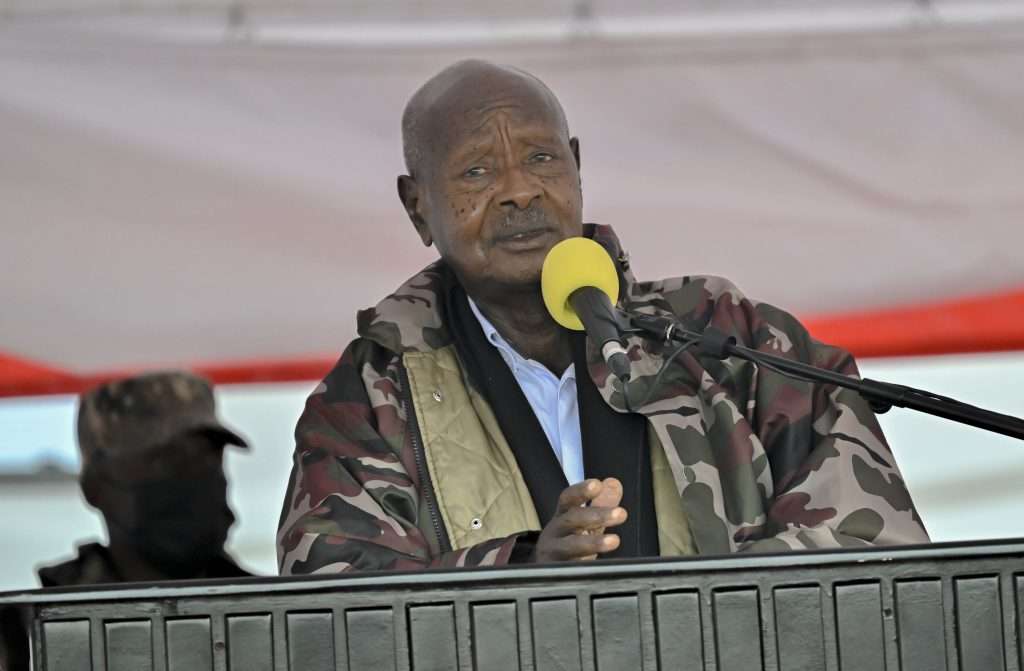
In a significant stride towards bolstering Uganda’s economic independence and achieving its ambitious agro-industrialisation goals, President Yoweri Kaguta Museveni recently commissioned the National Enterprise Corporation (NEC) Meat and Beans Processing Factory. Located in Katonga, Kisozi, Gomba District, this modern facility is more than just a new plant; it symbolises a pivotal shift from raw material export to value-added production, poised to create jobs, empower farmers, and strengthen national self-sufficiency.
The state-of-the-art processing plant is a collaborative venture between NEC, the commercial arm of the Uganda People’s Defence Forces (UPDF), and Mr. Francis Ragwa, a Kenyan investor who serves as the Managing Director of the new facility. President Museveni personally commended Mr. Ragwa for his entrepreneurial spirit, stating, “First of all, I want to congratulate Mr. Ragwa for taking the initiative. Yes, NEC has given you the land, but the ideas were yours and I thank you and congratulate you.”
Driving Agro-Industrialisation and Reducing Import Reliance
The factory’s strategic importance was further underscored by Defence Minister Hon. Kiryowa Kiwanuka, who declared, “The UPDF is not only a fighting force but also a productive force. This factory is not just about business; it is about strategic logistics, troop welfare and national economic transformation.” For years, Uganda has relied on imported canned beef and beans for its military operations, with some products, like canned beans, sourced from as far as Brazil. This new facility is set to drastically reduce that import dependence, channelling resources back into the local economy.
Minister Kiwanuka highlighted that the factory has already created approximately 100 employment opportunities for engineers, food scientists, technicians, and other young Ugandans. Crucially, it also provides a ready and guaranteed market for livestock and bean farmers, directly aligning with the government’s agro-industrialisation agenda and the broader “tenfold economic growth strategy.”
Unlocking Uganda’s Agricultural Potential
President Museveni passionately reiterated his vision for Uganda’s agricultural transformation. He emphasised that the country possesses the raw materials—with cattle numbers soaring from approximately three million in 1986 to 16 million today—but the real challenge lies in organising farmers and securing reliable markets. Citing Uganda’s impressive growth in coffee production (from three million bags to about nine million, with projections to reach 20 million) and dairy output (from 200 million litres annually in 1986 to 5.4 billion litres today), he demonstrated how strategic planning and farmer mobilisation can yield significant results.
The President affirmed the government’s commitment to determining the most effective supply model for the factory, whether through intensive large-scale commercial farming or by mobilising organised smallholder farmers. “What remains is to streamline production because the real stimulus is the market. Once I am sure about the market, I can mobilise Ugandans using the correct economics,” he noted, urging farmers to embrace commercial production.
Addressing Bottlenecks and Fostering Investment
Beyond agricultural production, President Museveni addressed broader governance issues critical for industrial growth. He challenged government leaders, likening ministers to “pastors” responsible for nurturing their sectors, to be proactive in supporting investments. Expressing frustration over recurring infrastructure challenges, such as inadequate electricity supply for licensed factories, he called for greater coordination: “Once the Uganda Investment Authority licenses a factory, the government should already know where it is going to operate and ensure all the necessary infrastructure is available.” He voiced confidence that the new government team would strengthen coordination to eliminate such bottlenecks.
A Regional Model for Beef Export and Self-Reliance
Lt. Gen. James Mugira, the Managing Director of NEC, detailed the project’s journey, initiated over seven years ago and overcoming delays caused by the COVID-19 pandemic. He painted a compelling picture of Uganda’s potential in the global beef market. While Botswana, with fewer cattle, has successfully built a robust beef export industry through strong veterinary services, disease control, vaccination, and export systems, Uganda boasts superior natural advantages.
Lt. Gen. Mugira asserted that Uganda’s favourable climate, abundant pasture, sufficient labour, and particularly its internationally recognised Ankole cattle—known for producing quality, low-cholesterol beef—position it strongly for global leadership. He urged the Ministry of Agriculture to significantly strengthen disease control, vaccination, and export certification systems to fully harness this potential.
Mr. Francis Ragwa, Managing Director of the processing plant, further emphasised the spirit of regional cooperation and African self-reliance. He highlighted that the joint venture agreement, signed in 2019, despite COVID-induced delays, is “proof that Africans can invest, create industries and employ themselves.” He also acknowledged President Museveni’s role in maintaining the peace and stability essential for attracting and retaining such investments in Uganda.
Looking Ahead: A Catalyst for Economic Transformation
The commissioning ceremony, attended by key government figures including Hon. Henry Musasizi (Minister of Finance, Planning and Economic Development), Hon. Sanjay Tanna (Minister of Trade, Industry and Cooperatives), and Mr. Ramathan Ggoobi (Permanent Secretary and Secretary to the Treasury), among others, underscored the broad governmental commitment to this initiative.
The NEC Meat and Beans Processing Factory is a bold statement of Uganda’s intent to transform its economy from an exporter of raw materials to a hub of value-added production. Its success will not only depend on effective farmer mobilisation and robust infrastructure but also on sustained policy support and a keen eye on global market standards. This facility stands as a testament to Uganda’s aspirations for a prosperous, industrially advanced future, deeply rooted in its agricultural wealth.