Contribuer au contenu ou vous faire connaître à l’Afrique et sa diaspora ? Contactez-nous ! Want to contribute content or promote yourself to Africa and its diaspora? Contact us!
Morocco’s Renewable Milestone: Noor Ouarzazate Powering 2 Million Homes

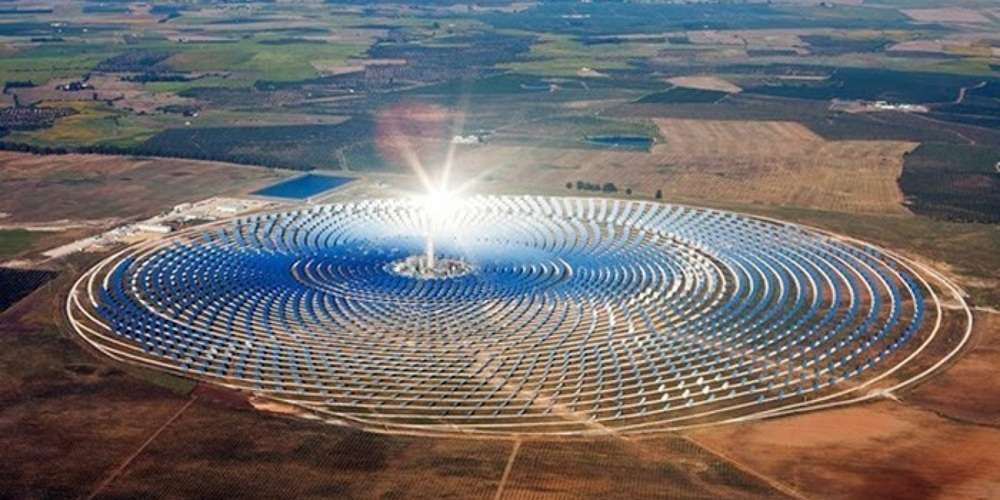
Morocco continues to cement its position as a global frontrunner in the green energy transition. In 2026, the Noor Ouarzazate solar complex—a true marvel of modern engineering—achieved a historic milestone. As one of the world’s largest concentrated solar power (CSP) facilities, it is now playing a pivotal role in the nation’s grid, successfully powering nearly two million homes during peak hours.
Technological Excellence and Stability
The success of Noor Ouarzazate lies in its sophisticated, hybrid architecture. By integrating cylindrical-parabolic mirrors, solar tower technology, and high-efficiency photovoltaic systems, the complex boasts an installed capacity exceeding 580 megawatts.
The real genius of this infrastructure is its molten salt thermal storage system. This capability allows the facility to store solar energy during the day and continue producing electricity long after sunset. This is a game-changer for grid stability, enabling the facility to meet the high energy demand peaks experienced during the evening, significantly reducing Morocco’s reliance on imported fossil fuels.
A Multifaceted Economic and Ecological Impact
Beyond its impressive energy output, the project’s benefits are felt across the board:
- Carbon Neutrality: The complex prevents the emission of approximately one million tons of carbon dioxide (CO₂) annually, making a massive contribution to the Kingdom’s climate goals.
- Local Growth: The project has created hundreds of highly skilled jobs for engineers and technicians in the Drâa-Tafilalet region, while simultaneously serving as an advanced training hub for the next generation of African renewable energy experts.
- Grid Security: By injecting clean, reliable energy into the national grid, Noor Ouarzazate is providing a secure foundation for Morocco’s growing industrial and agricultural sectors.
Towards a Diversified Energy Future
The triumph of Noor Ouarzazate is a central pillar of Morocco’s broader national strategy. In 2026, the Kingdom is not just stopping at solar; it has surpassed the symbolic milestone of one gigawatt of installed solar capacity and is rapidly expanding its footprint in wind energy and green hydrogen production.
With renewable sources now accounting for nearly 45% of its electricity mix, the Kingdom is steadily closing in on its ambitious target of 52% by 2030. More than ever, the Ouarzazate complex stands as a beacon for the continent, proving that Africa is not just following the global energy transition—it is leading it.