Contribuer au contenu ou vous faire connaître à l’Afrique et sa diaspora ? Contactez-nous ! Want to contribute content or promote yourself to Africa and its diaspora? Contact us!
Lilac-Breasted Roller: Africa’s Rainbow Bird and National Symbol of Botswana

Common Name(s):
Lilac-Breasted Roller, Fork-Tailed Roller, Mosilikatze’s Roller
Scientific Name:
Coracias caudatus
Type:
Bird – Roller (Coraciidae family) – Carnivore (insectivore/small vertebrates)
Origin and Distribution:
Native to sub-Saharan Africa, from Senegal and Ethiopia south to South Africa. Common in East and Southern Africa.
Habitat:
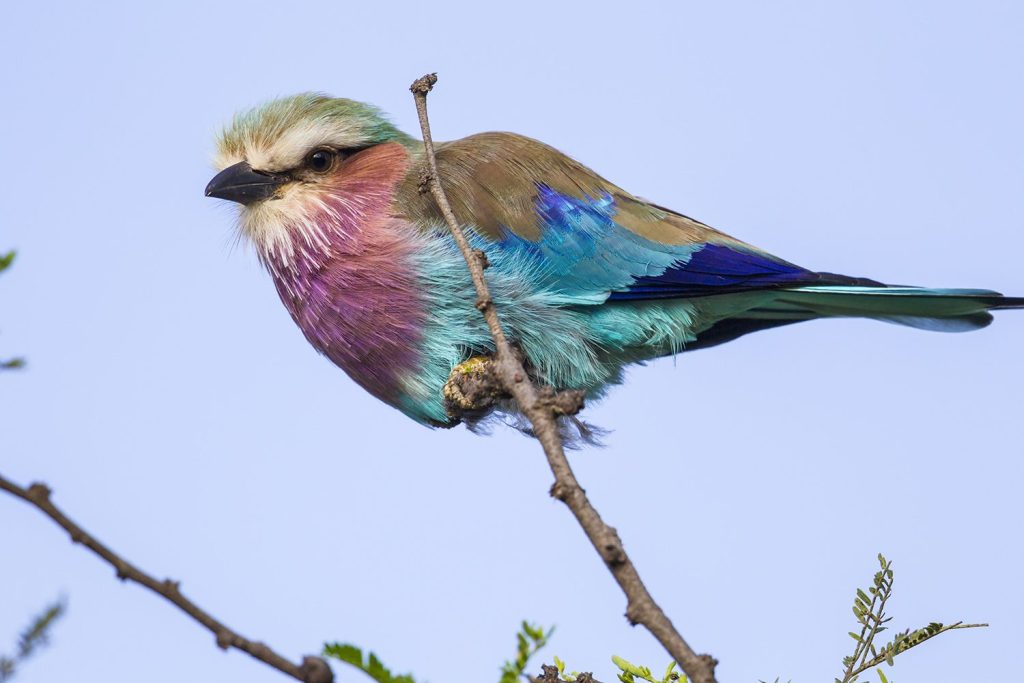
Open woodlands, savannas, and bushveld with scattered trees for perching. Often seen on dead branches or wires overlooking clearings.
Physical Description:
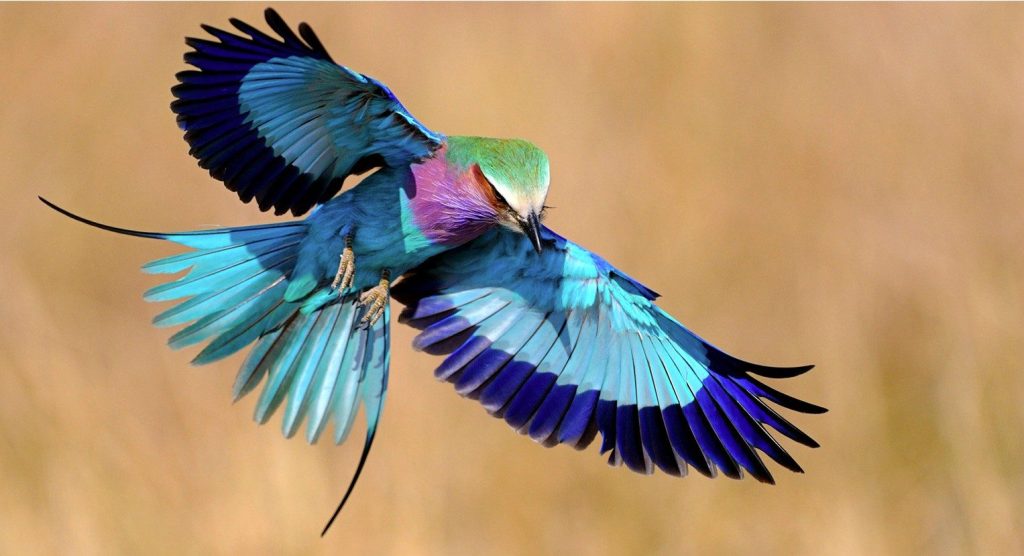
Medium-sized bird (28–40 cm long, including long tail streamers). Spectacular multicolored plumage: lilac throat and breast, turquoise crown and wings, olive back, azure rump, and rufous cheeks. Long outer tail feathers form “fork.” Beak black, eyes brown. Performs acrobatic rolling flights during courtship.
History and Cultural Significance:
National bird of Botswana and Kenya. Often called Africa’s most beautiful/photographed bird. Named “roller” for tumbling aerial displays. Featured in tourism and conservation as a symbol of colorful African avifauna.
Behavior and Lifestyle:
Perches conspicuously to hunt insects (grasshoppers, beetles), lizards, and small birds—dives or glides to catch prey. Territorial; pairs nest in tree holes. Dramatic courtship: males climb high, then roll/tumble downward while calling. Non-migratory but nomadic following rains.
Conservation Status and Threats:
Least Concern (IUCN), with stable populations. Benefits from protected areas; no major threats but vulnerable to habitat degradation and pesticides reducing insect prey.
Fun Facts
- Eight different colors in plumage—often called the “rainbow bird.”
- Rolling flight display can involve 5–10 tumbles per courtship.
- Long tail streamers add 10–15 cm to length, used in displays.
- Frequently perches on open branches—easy to spot/photograph on safari.
- Harsh “krak-krak” call, but silent during rolls.
Best Places to See It in the Wild:
Maasai Mara & Serengeti (Kenya/Tanzania), Kruger National Park (South Africa), Chobe National Park (Botswana), Etosha National Park (Namibia), Moremi Game Reserve (Okavango Delta).