Contribuer au contenu ou vous faire connaître à l’Afrique et sa diaspora ? Contactez-nous ! Want to contribute content or promote yourself to Africa and its diaspora? Contact us!
Leopard: The Elusive Master of Stealth That Hoists Prey into Trees


Common Name(s):
Leopard, African Leopard
Scientific Name:
Panthera pardus
Type:
Mammal – Carnivore (Felidae family)
Origin and Distribution:
Native to sub-Saharan Africa (and a small Asian population). Widespread but secretive; found in 48 African countries, with strongholds in East and Southern Africa.
Habitat:
Highly adaptable: savannas, woodlands, rainforests, mountains, and even semi-deserts. Prefers areas with cover for ambush hunting and trees for resting/prey storage.
Physical Description:
Medium-large cat: males 60–90 kg, females 35–60 kg; 1–1.9 m long (plus 60–110 cm tail). Golden-yellow coat with black rosettes (spots) for perfect camouflage. Powerful build, short legs, long tail for balance. Strong jaws and retractable claws for climbing.
History and Cultural Significance:
Ancient symbol of power (Egyptian goddess Mafdet). One of the “Big Five” for trophy hunters due to elusiveness. In African folklore, often clever and mysterious. Now a flagship for habitat conservation.
Behavior and Lifestyle:
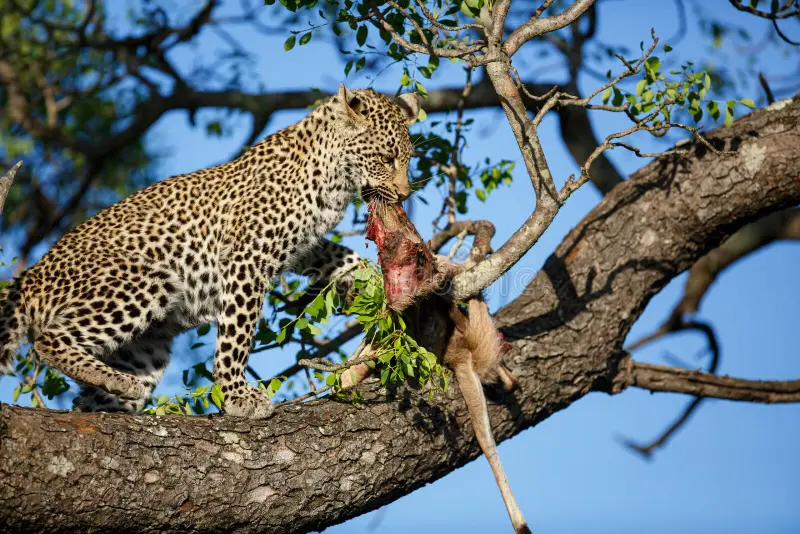
Solitary and nocturnal/crepuscular. Ambush hunters taking antelope, monkeys, birds, even crocodiles. Famous for dragging prey (up to twice their weight) into trees to avoid lions/hyenas. Excellent climbers and swimmers. Mark territory with scent/scratches; females raise cubs alone.
Conservation Status and Threats:
Vulnerable (IUCN). Population ~700,000 but declining rapidly in many areas. Threats: habitat loss, poaching (skin/bones), human conflict (livestock), prey depletion. Some populations stable in protected reserves.
Fun Facts
- No two leopards have identical rosette patterns—like fingerprints.
- Can leap 6 m horizontally or 3 m vertically.
- Hoists kills heavier than itself high into trees.
- Melanistic “black panthers” are leopards with excess pigment.
- Roars like lions but also purrs.
Best Places to See It in the Wild:
Sabi Sands & Kruger National Park (South Africa), Maasai Mara (Kenya), South Luangwa National Park (Zambia), Okavango Delta (Botswana), Serengeti (Tanzania).