Contribuer au contenu ou vous faire connaître à l’Afrique et sa diaspora ? Contactez-nous ! Want to contribute content or promote yourself to Africa and its diaspora? Contact us!
Hippopotamus: Africa’s Semi-Aquatic Giant Responsible for More Human Deaths Than Any Other Large Animal

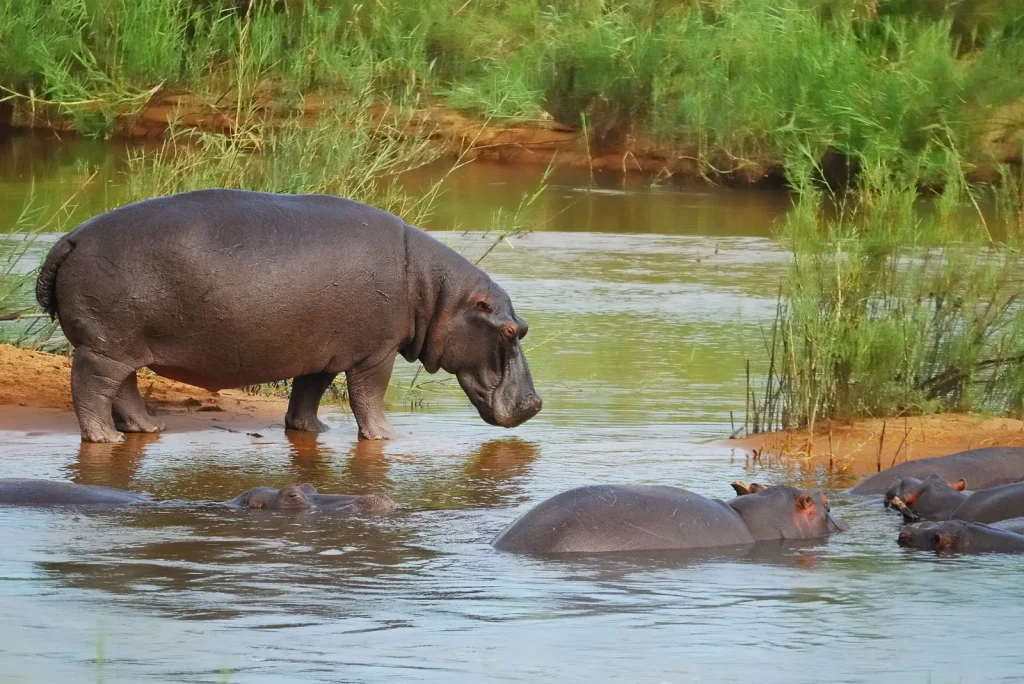
Common Name(s):
Hippopotamus, Hippo, River Horse
Scientific Name:
Hippopotamus amphibius
Type:
Mammal – Even-toed ungulate (Hippopotamidae family) – Herbivore
Origin and Distribution:
Native exclusively to sub-Saharan Africa. Once widespread across the continent; now mainly East and Southern Africa (e.g., Zambia, Tanzania, Botswana, South Africa).
Habitat:
Rivers, lakes, swamps, and waterholes in savannas and grasslands. Spends days submerged in water to keep cool; emerges at night to graze on land.
Physical Description:
Third-largest land mammal (after elephants and rhinos). Adults 3–5 m long, 1.5 m at shoulder, weigh 1,500–4,000 kg. Barrel-shaped body, short legs, massive head with wide mouth (opens 150° showing huge canines up to 50 cm). Skin grey-pink, secretes “blood sweat” (red oily fluid for sun protection/antiseptic). Hairless except for bristles.
History and Cultural Significance:
Name from Greek “river horse.” Ancient Egyptians revered them; featured in art as symbols of power. In African folklore, often portrayed as aggressive or cunning. Responsible for ~500 human deaths yearly—more than lions or crocodiles.
Behavior and Lifestyle:
Semi-aquatic: spends up to 16 hours/day in water to avoid sun. Territorial in water (males defend stretches); more tolerant on land. Herbivores grazing 40–50 kg grass nightly. Live in pods (10–30) led by dominant bull. Calves born underwater after 8-month gestation; mothers protective.
Conservation Status and Threats:
Vulnerable (IUCN). Population ~115,000–130,000 and declining. Threats: habitat loss (dams, agriculture), poaching for meat/teeth, human conflict. Protected in reserves; some populations stable.
Fun Facts
- Can run 30 km/h on land—faster than most humans over short distances.
- “Blood sweat” is a natural sunscreen and antibiotic.
- Yawn as threat display, not tiredness—showing massive teeth.
- Closest living relatives are whales and dolphins.
- Calves can suckle underwater by closing ears/nostrils.
Best Places to See It in the Wild:
St Lucia Wetland Park (South Africa), Okavango Delta (Botswana), Luangwa Valley (Zambia), Serengeti (Tanzania), Chobe River (Botswana).