Contribuer au contenu ou vous faire connaître à l’Afrique et sa diaspora ? Contactez-nous ! Want to contribute content or promote yourself to Africa and its diaspora? Contact us!
Camel Thorn: The Kalahari’s Resilient “Desert Guardian”

Common Name(s): Camel Thorn, Giraffe Thorn, Mokala (Tswana)
Scientific Name: Vachellia erioloba (formerly Acacia erioloba)
Plant Type: Deciduous tree
Family: Fabaceae (legume family)
Origin and Endemism: Native to southern Africa, particularly the arid and semi-arid regions. One of the most characteristic trees of the Kalahari.
Natural Distribution: South Africa (Northern Cape, North West, Limpopo), Namibia, Botswana, Zimbabwe, and parts of Angola. Iconic in the Kalahari Desert and surrounding dry savannas.
Habitat & Growing Conditions: Arid savannas, dry riverbeds (often along “fossil rivers”), and sandy soils. Extremely drought-tolerant with a deep taproot that can reach underground water sources over 30 metres deep.
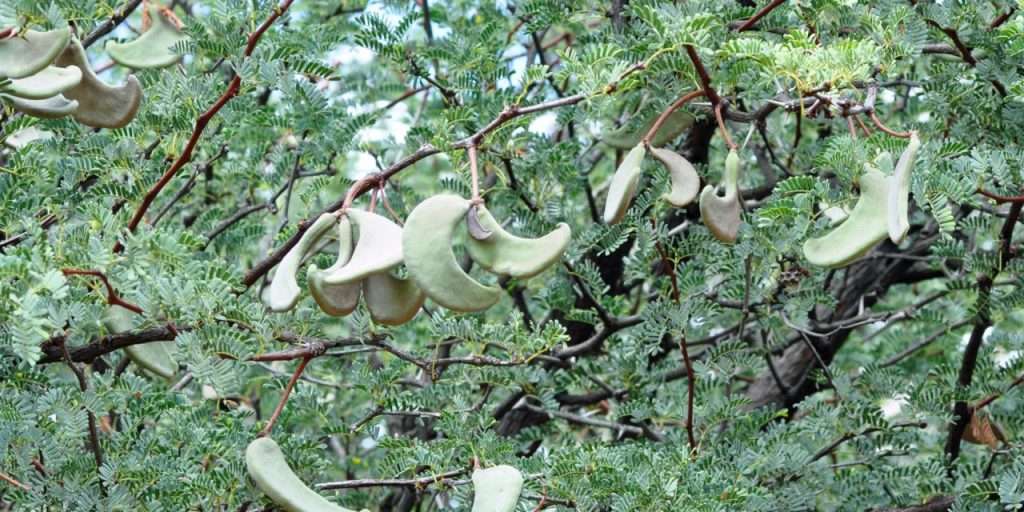
Physical Description: Medium to large tree, 10–20 m tall, with a spreading, flat-topped crown typical of acacias. Distinctive paired, straight white thorns up to 8 cm long. Small, bright yellow, ball-shaped flowers that are highly fragrant. Grey-brown bark becomes deeply fissured with age. Produces curved, sickle-shaped pods that turn brown when ripe.
Ecological Role: Keystone species in arid ecosystems. Provides vital shade and food in harsh environments. Pods and leaves are important browse for giraffes, elephants, and antelopes. Nitrogen-fixing roots enrich poor desert soils. Flowers are a major nectar source for bees.
Reproduction & Lifespan: Flowers after rains; pollinated by bees and other insects. Pods are eaten and dispersed by animals (especially elephants). Very long-lived — many specimens exceed 200–300 years.
Human Uses & Cultural Significance: Wood is extremely hard and durable — used for fence posts, furniture, and carvings. Pods are high in protein and used as animal fodder. In traditional medicine, bark and roots treat various ailments. Sacred or culturally important in many San and Tswana communities.
Conservation Status and Threats: Least Concern, but vulnerable to climate change, over-browsing by livestock, and cutting for firewood in some areas. Protected in many Kalahari reserves.
Fun Facts / Did You Know? • Giraffes have specially adapted tongues and lips to eat around the long, sharp thorns. • The pods make a rattling sound when dry — often used in traditional rattles and decorations. • Can survive in areas receiving less than 200 mm of rain per year thanks to its massive root system. • One of the few trees that provides reliable shade and food in the middle of the Kalahari.
Best Places to See It in the Wild: Kgalagadi Transfrontier Park (South Africa/Botswana), Etosha National Park (Namibia), Central Kalahari Game Reserve (Botswana), and along dry riverbeds in the Kalahari.
Sources & Further Reading:
- SANBI (South African National Biodiversity Institute)
- Trees of Southern Africa guides
- Kalahari ecology resources