Contribuer au contenu ou vous faire connaître à l’Afrique et sa diaspora ? Contactez-nous ! Want to contribute content or promote yourself to Africa and its diaspora? Contact us!
Burkina Faso’s Bold Development Agenda Under Captain Ibrahim Traoré


Since taking power in September 2022, Captain Ibrahim Traoré has become one of Africa’s most popular leaders, implementing transformative policies aimed at putting Burkina Faso on a path toward economic independence and rapid development. At just 36, he stands as the world’s youngest president, commanding notable appeal among the continent’s youth-heavy population. His government’s development efforts paint a picture of a nation determined to harness its resources and reshape its economic future.
A Fresh Economic Vision
When Traoré assumed office, he inherited a country facing acute crises in security, healthcare, infrastructure, and governance. Yet rather than pursuing the conventional path of international borrowing, his administration has charted a distinctly different course. The government has explicitly rejected financing from the International Monetary Fund and World Bank, declaring that Africa must develop through its own resources rather than rely on Western loans and their associated conditions.
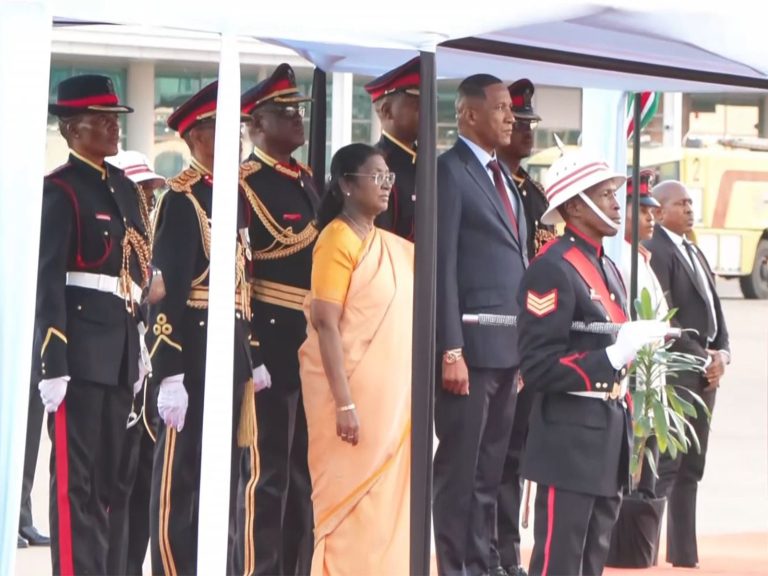
This economic nationalism has resonated powerfully with Burkinabés, particularly younger citizens. In January 2025, during the inauguration of Ghana’s president, Traoré received the loudest applause among 21 African heads of state—a striking testament to his regional influence and domestic backing.
Mining and Mineral Resource Control
One of the government’s most dramatic moves has centered on reclaiming control of Burkina Faso’s vast mineral wealth. The administration has nationalized two gold mines and halted the export of unrefined gold to Europe, instead establishing a national gold refinery designed to process 150 tonnes of gold annually. This shift keeps more value within the country and creates employment opportunities for Burkinabés.
This move toward resource nationalism reflects a deliberate attempt to ensure that Burkina Faso’s natural riches—gold, zinc, copper, manganese, phosphate, limestone, and reserves of diamonds and bauxite—benefit local populations rather than foreign corporations. The government has even cleared a significant portion of external debt, with reports suggesting the nation eliminated $4.7 billion in external obligations through improved fiscal management and increased revenue from mineral exports.
Agricultural Expansion and Food Security
Agriculture has emerged as a cornerstone of the government’s development strategy. The administration has dramatically increased support to farmers, distributing equipment and inputs worth over 78 billion CFA francs in 2024 alone—more than double the previous year’s allocation and over five times the average distribution from the preceding five years.
These investments have yielded impressive results. Cereal production reached nearly six million tonnes in 2024. Specific agricultural outputs expanded significantly between 2022 and 2024: tomato production grew from 315,000 to 360,000 metric tonnes, millet output rose from 907,000 to 1.1 million metric tonnes, and rice production increased from 280,000 to 326,000 metric tonnes. This focus on agricultural self-sufficiency addresses food security concerns while generating surpluses for export.
Industrial Development and Processing
Beyond primary production, the government is pursuing agricultural industrialization. The administration has established tomato processing plants—the first such facilities in Burkina Faso—alongside a second cotton processing facility and the National Support Center for Artisanal Cotton Processing. These initiatives reflect a strategy to add value within the country rather than exporting raw materials.
Infrastructure Projects
Significant infrastructure development is underway to support broader economic growth. The government is constructing and upgrading roads, converting gravel surfaces to paved highways, and building the Ouagadougou-Donsin Airport, expected to handle 1 million passengers annually upon completion in 2025. Plans also include a high-speed rail network, investments intended to facilitate commerce and connection across the nation.
Governance Reforms and Equity
Traoré has also implemented populist-oriented governance reforms that have strengthened his political standing. The administration cut ministerial and parliamentary salaries by 30 percent while increasing civil servant wages by 50 percent—a redistribution aimed at narrowing inequality. The government has also emphasized anti-corruption measures and promised accelerated implementation of development projects.
Symbolic gestures have accompanied these economic policies. The administration banned British legal wigs and gowns in local courts, replacing them with traditional Burkinabé attire—a cultural assertion accompanying economic independence.
Economic Prospects and Challenges
The potential is substantial. Research from the Institute for Security Studies projects that Burkina Faso’s economy could grow at an average rate of 8 percent annually from 2025 to 2043, potentially lifting an additional 2.4 million people out of poverty by 2043. The same analysis identifies good governance as critical to unlocking this potential, noting that improved governance alone could add $240 to GDP per capita and lift 500,000 people out of extreme poverty.
Indeed, Burkina Faso has already experienced measurable economic growth. GDP expanded from approximately $18.8 billion to $22.1 billion during Traoré’s tenure, with 2024 growth projected at 3.7 percent—respectable growth amid ongoing security challenges.
However, significant obstacles remain. The country ranks 185th out of 193 nations on the Human Development Index, and 64.5 percent of the population faces multidimensional poverty. A decade-long struggle against Islamist insurgency continues to destabilize portions of the country, complicating development efforts and straining state capacity.
The Road Ahead
As Burkina Faso looks toward 2029, when Traoré’s extended transition period may end, the critical question is whether his government can translate popular support and bold policy announcements into sustained institutional development. Success requires not only maintaining the current momentum but also ensuring that state-owned enterprises—traditionally plagued by inefficiency, corruption, and mismanagement across Africa—function effectively in managing the country’s mineral wealth and industrial projects.
For a nation endowed with substantial natural resources but historically dependent on external financing, Traoré’s development agenda represents a fundamental reimagining of Burkina Faso’s relationship with global institutions and its own economic potential. Whether this young, popular leader can deliver lasting transformative development while navigating internal security challenges and maintaining governance quality will shape West Africa’s trajectory in the coming years.