Contribuer au contenu ou vous faire connaître à l’Afrique et sa diaspora ? Contactez-nous ! Want to contribute content or promote yourself to Africa and its diaspora? Contact us!
African Diaspora in Germany: The Student, the Asylum Seeker, and the Bundesliga Star

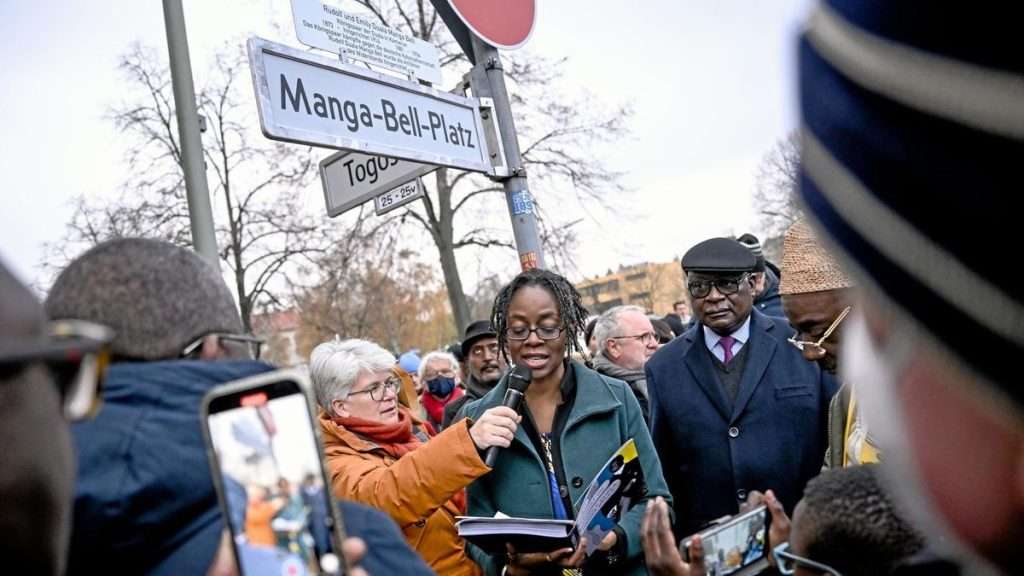
Germany is Europe’s largest economy, its demographic powerhouse, and—for much of its history—a country that refused to see itself as a nation of immigrants. Yet today, Germany is home to one of the most dynamic and rapidly growing African diasporas on the continent. As of 2020, an estimated 1 million Afro-Germans live in a country of 83 million . They are students, doctors, engineers, asylum seekers, Bundesliga footballers, and the descendants of colonial subjects who arrived over a century ago.
This is a diaspora shaped by three distinct forces: colonialism’s brutal legacy, the aftermath of World War II, and the economic migration of the late 20th and early 21st centuries. It is a community that has been systematically marginalized—sterilized under the Nazis, isolated by the postwar West German state, and subjected to everyday racism that persists today. Yet it is also a community of resistance, creativity, and increasing visibility, one that has produced poets, philosophers, politicians, and football icons who are reshaping Germany’s identity from the margins.
1. The Three Waves of Arrival
The Colonial Era: The First Africans in Germany
The African presence in Germany began in earnest with the country’s late entry into the colonial race. At the 1884 Berlin Congo Conference—where European powers carved up the African continent—Germany secured colonies in Togo, Cameroon, Namibia, and parts of East Africa .
From these colonies, a small number of Africans migrated to Germany. Before World War I, roughly 240 Cameroonians—mostly young men from the Duala ethnic group—arrived in metropolitan Germany, coming as students, apprentices, sailors, language instructors, and household servants . They were a tiny community, but they established the foundations of a permanent Black presence in German cities.
Their lives were shaped by the racism of the colonial era. In the colonies, the German authorities aggressively campaigned against interracial marriage, invalidating marriages and stripping mixed-race children of German citizenship . In 1907, the German director for colonial affairs infamously stated that “some native tribes, just like some animals, must be destroyed” —a chilling premonition of the genocide committed against the Nama and Herero peoples in German South West Africa (modern-day Namibia).
The Weimar Republic and the Nazi Era: Community and Destruction
After World War I, Germany lost its African colonies. But the African community in Germany persisted. During the Weimar Republic, Africans in Germany became politically active, founding bilingual newspapers like the Elolombe ya Cameroon (Sun of Cameroon) and establishing the German branch of the Paris-based League for the Defense of the Negro Race . They also engaged in a “politics of petition,” demanding colonial reform and political freedoms for colonial subjects .
This brief moment of community-building was crushed by the rise of the Nazis. Under Hitler, Afro-Germans were considered “enemies of the race-based state,” alongside Jews and Roma . Naturalized Afro-Germans lost their passports, and employers were prohibited from hiring or retaining Black employees . In an extension of the Nazi campaign against so-called “Rhineland bastards”—children of German women and African soldiers who had occupied the Rhineland after World War I—some 500 Afro-German children were forcibly sterilized .
Life became unbearable for the community. Most of the Cameroonians who had survived the pre-war period resettled in France, a country where their liminal colonial status provided slightly more security . Others faced deportation, concentration camps, and, for some, death.
The Postwar Era: Brown Babies and the Allied Occupation
The end of World War II brought a new, unexpected wave of African presence to Germany. Allied occupation forces included hundreds of thousands of soldiers of African American, Afro-Caribbean, and African descent. Many fathered children with German women. Around 8,000 of these biracial children—known as “brown babies”—were born immediately after the war, making up about 1% of all births in ethnically homogeneous West Germany in 1945 .
The West German government pursued a policy of isolating or removing these children from the country, viewing them as a problem to be solved . Thousands were adopted by American families and grew up in the United States, often unaware of their full ancestry until reaching adulthood.
The Modern Wave: Students, Asylum Seekers, and Skilled Professionals
Since the 1980s, Germany has experienced a significant influx of African immigrants—this time driven by economic migration, education, and asylum-seeking.
The 1970s and 1980s saw a wave of Ghanaians arriving in Germany, fleeing economic and social crises. According to official figures, more than 23,000 Ghanaians lived in Germany at the turn of the millennium, with the majority arriving between the late 1970s and early 1990s . By 2021, the number of Ghanaians in Germany had grown to 66,000 . This wave was joined by students, asylum seekers, and economic migrants from Nigeria, Eritrea, Cameroon, South Africa, Somalia, and Ethiopia .
In 2021, the largest Sub-Saharan African communities in Germany were :
| Country of Birth | Immigrants in Germany (2021) |
|---|---|
| Nigeria | 83,000 |
| Eritrea | 75,000 |
| Ghana | 66,000 |
| Cameroon | 41,000 |
| South Africa | 34,000 |
| Somalia | 30,000 |
| Ethiopia | 27,000 |
The Ethiopian diaspora in Germany, while relatively small (around 30,000, or 3% of the total African population), has developed vibrant community institutions, including rotating savings and credit associations known as equubs—community-based financial institutions that provide mutual aid in the face of financial exclusion .
2. The Core Tension: The “Social Coloring” and the Paradox of Migration
The core tension facing the African diaspora in Germany is what one researcher has called the “paradox of migration”: living in two status systems with contradictory attributions of prestige at the same time .
For Ghanaian migrants in Germany, this paradox is palpable. In Germany, they experience marginalization, struggle to find work fitting their qualifications, and are forced to take jobs they would never have accepted in Ghana. The asylum procedure through which many have passed produces “spoiled identities.” They become what one researcher describes as “socially colored”—their skin color becomes a marker of status in ways it never was at home .
Yet in Ghana, these same migrants are perceived as socially successful, modern, and wealthy. The money they send home, the cars they bring on visits, the consumer goods they purchase—all signal access to a global modernity that is coveted back home .
As one researcher notes, “The gaining of status in one context is achieved by a loss of status in the other” . This paradox is processed through local migrant organizations—churches, social clubs, and national associations like the Ghana Union—which provide a symbolic space where migrants can experience themselves as successful and modern, even as they face marginalization in their daily lives in Germany .
The Afrozensus, the first comprehensive survey of People of African Descent in Germany, has revealed the ubiquity of anti-Black racism in all areas of everyday life. Nearly half of respondents (47%) reported experiencing discrimination in finance and insurance, highlighting the structural barriers that the diaspora continues to face .
3. Economic Footprint: Bridges, Remittances, and Financial Innovation
The Diaspora as an Economic Bridge
The African diaspora in Germany is increasingly recognized as an economic bridge between Germany and Africa. As one diaspora professional put it, “Germany’s Sub-Saharan African diaspora is now middle-class and the most successful ethnic minority”—they are mayors, doctors, software developers, engineers, lawyers, bankers, and members of parliament .
These professionals are “people who work at Bosch during the day, but call their grandmother in the African village to check on medical supplies, are involved in the village reunion, or pay bills for bereavements, weddings, communion, tabaski” . They are also investors: they work as investment bankers in Frankfurt during the day and open a restaurant in Yaoundé as a side business, or build a training center, hospital, or company in their home country .
Remittances
Ghanaian remittances from Germany are estimated to be in the hundreds of millions of dollars annually. By 2000, Ghanaian remittances from all destinations were estimated at between $300 and $400 million—after cocoa, gold, and tourism, remittances are the fourth largest source of foreign exchange for Ghana . Germany is a significant contributor to this flow.
Equubs: A Postcapitalist Finance Model
The Ethiopian diaspora in Germany has developed innovative community-based financial institutions known as equubs—rotating savings and credit associations (ROSCAs) that serve as alternatives to formal banking.
Equubs operate on a simple principle: members make regular contributions to a fund, which is given in whole or in part to each contributor in rotation. In Berlin, one equub studied had six members, each contributing €250 monthly, with the collective fund of €1,500 distributed to a different member each month.
These institutions are valued for their decommodified, socially embedded financial relations. They are based on trust, reciprocity, solidarity, and belonging—values that formal banking institutions, perceived as impersonal, inflexible, and bureaucratic, cannot provide . Equubs also serve as a form of resistance against financial exclusion: almost half of Afro-Germans report having experienced discrimination in finance and insurance.
4. Cultural Takeover: May Ayim, Audre Lorde, and the Afro-German Movement
The most significant cultural contribution of the African diaspora in Germany is the Afro-German movement—a political and cultural awakening that gave a name and voice to Black Germans.
May Ayim and the Birth of Afro-German Consciousness
The term “Afro-German” was coined in 1984 when a group of Black German women met with the Afro-American writer Audre Lorde, who was teaching at the Free University of Berlin. They decided to define themselves instead of constantly being defined by others . This meeting gave birth to the Initiative Schwarze Deutsche (Initiative of Black Germans), or ISD, and launched a movement that addressed the intersectionality of race, gender, and sexual orientation .
The leading figure of this movement was May Ayim (1960–1996), a poet and activist born to a white German mother and a Black Ghanaian father. Although Ayim spoke German, grew up in Germany, and was fully acculturated into German society, she moved through that society as a foreigner. Her racial and cultural identity were incompatible in the eyes of a society that had a fixed concept of “Germanness” .
Ayim used poetry to voice her experiences and identity as a Black woman in Germany. She was one of the first to articulate the experience of being German and Black in a country that refused to see her as either. She took her own life in 1996 at the age of 36 . Her legacy continues to inspire activists and artists across Germany.
Berlin: A Crucible of Diaspora Consciousness
Berlin has been a crucible of Afro-German consciousness. It was the city where W.E.B. DuBois sojourned in the 1890s, studying at the Friedrich Wilhelm University (now Humboldt University) while living on Oranienburg Strasse—the same street where the ISD would establish its offices a century later . It was the city where Audre Lorde taught and inspired a generation of Black German women. And it is the city where the African diaspora in Germany is most visible today.
5. The Political Voice: From Petition to Parliament
The Politics of Petition
Afro-Germans have a long tradition of political activism. In the interwar period, the community engaged in a “politics of petition,” demanding colonial reform and political freedoms. These petitions were addressed to the metropolitan public and policymakers, and they demanded concrete changes: campaign for the legitimacy of mixed marriages, for example, or for the right of colonial subjects to travel freely .
The Afrozensus and the Fight for Visibility
Today, the political fight is for visibility. The Afrozensus, the first comprehensive survey of People of African Descent in Germany, was a landmark moment. It revealed the ubiquity of anti-Black racism and provided evidence that could be used to advocate for policy change .
Diaspora Professionals in Politics
Diaspora professionals are increasingly entering German politics. Mirabell Mayack, a German-Cameroonian businesswoman, speaks of “diaspora as a bridge”—a bridge between German companies and African markets, between two cultures, two mindsets, two worlds . Mayack observes that “observing roundtables in German politics where Africa is discussed without these bridges is a wasted opportunity on so many levels” .
6. Main Communities: Where Do They Live?
The African diaspora in Germany is concentrated in several major cities, many of which have historical ties to the occupation forces after World War II or to contemporary migration patterns :
| City | Estimated Black Population |
|---|---|
| Berlin | 2% (70,000) |
| Hamburg | 3% (54,000) |
| Frankfurt | 2% (14,000) |
| Munich | 1% (14,000) |
| Dortmund | 2% (12,000) |
| Cologne | 1% (11,000) |
| Bremen | 1.5% (9,000) |
Berlin’s Afrikanisches Viertel (African Quarter) is a legacy of the colonial period, with streets and squares named after countries and locations tied to the German colonial empire. It is now home to a substantial portion of Berlin’s residents of African heritage .
7. Fun Facts & Shocking Realities
- Anton Wilhelm Amo (c. 1703–1759), a Ghanaian, was the first African to attend a European university. Sponsored by a German duke, he completed his studies in philosophy and went on to teach and write at German universities .
- Frederick Wilhelm I of Prussia sold his Ghanaian estates in 1717, and the new owners were contractually bound to send “12 negro boys, six of them decorated with golden chains” to the king. These enslaved children were brought to Potsdam and Berlin .
- The “Brown Babies” – approximately 8,000 biracial children were born to German mothers and Allied soldiers in 1945, making up about 1% of all births in postwar West Germany. Many were isolated or removed by the West German state .
- Audre Lorde’s Berlin Years (1984–1992) – the Afro-American writer and activist spent almost a decade teaching at the Free University of Berlin, helping to coin the term “Afro-German” and launching a movement .
- The Afrozensus (2021) was the first comprehensive survey of People of African Descent in Germany, revealing widespread anti-Black racism across all areas of everyday life .
- Equubs, community-based rotating savings and credit associations, are well-established in the Ethiopian diaspora in Germany. They serve as alternatives to formal banking systems and represent a form of “postcapitalist finance” rooted in African traditions .
8. Main Personalities (The Icons)
- Anton Wilhelm Amo (c. 1703–1759): The Ghanaian philosopher who became the first African to attend a European university and went on to teach at German universities .
- May Ayim (1960–1996): Poet, activist, and a founder of the Afro-German movement. She gave voice to the experience of being Black in Germany and took her own life at 36 .
- Audre Lorde (1934–1992): Afro-American writer and activist whose teaching in Berlin inspired the Afro-German movement. She helped coined the term “Afro-German” .
- Hans Massaquoi: Author of Destined to Witness, a memoir of his life as a Black German under Nazi rule. A rare first-person account of surviving the Nazi state as a person of African descent .
- Theodor Wonja Michael (1925–2019): The main witness in the documentary film Pages in the Factory of Dreams, Michael published his autobiography Deutsch Sein und Schwarz Dazu (Being German and Black Too) in 2013 .
- Mirabell Mayack: A German-Cameroonian businesswoman and cultural ambassador who advocates for the diaspora as an economic bridge between Germany and Africa .
The Verdict: A Community of Resilience and Visibility
The African diaspora in Germany is a community forged in the crucible of colonialism, genocide, and systemic racism—yet it is also a community of profound resilience, creativity, and increasingly, political power.
From the brutal violence of the colonial era and the Nazi state to the everyday discrimination revealed by the Afrozensus, the diaspora has faced relentless efforts to marginalize and erase it. Yet it has persisted—founding newspapers and political organizations in the Weimar Republic, building communities in the postwar era, and launching the Afro-German movement in the 1980s.
Today, the diaspora is entering the German middle class. It is producing mayors, doctors, software developers, engineers, lawyers, and members of parliament . It is building community-based financial institutions like equubs that draw on African traditions . And it is redefining what it means to be German.
As May Ayim wrote, the term “Afro-German” was born when a group of Black women decided to define themselves instead of constantly being defined by others . That act of self-definition continues to shape the diaspora today—a community that, despite all odds, is increasingly visible, increasingly powerful, and increasingly German.