Contribuer au contenu ou vous faire connaître à l’Afrique et sa diaspora ? Contactez-nous ! Want to contribute content or promote yourself to Africa and its diaspora? Contact us!
The Algerian Crucible: How a Divided Homeland Forged Jacques Derrida’s Thought

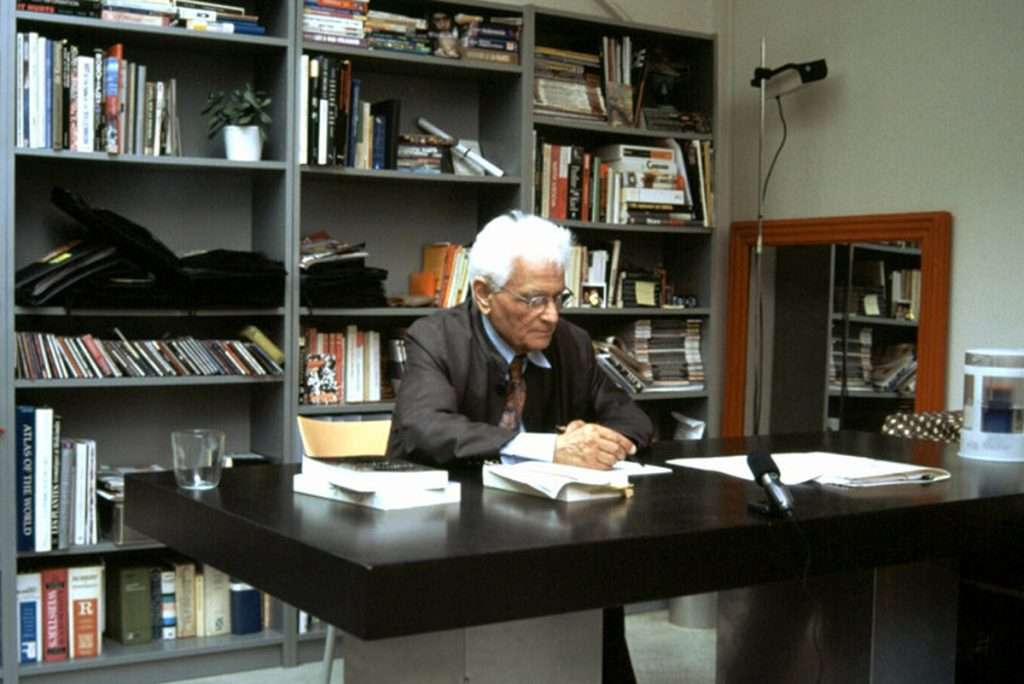
Jacques Derrida, the intellectual giant who introduced “deconstruction” into the global lexicon, is widely celebrated as a quintessential French philosopher, a luminary of European thought. Yet, to overlook the profound impact of his Algerian upbringing is to miss a crucial dimension of his intellectual formation. Born and raised in colonial Algiers, Derrida’s early life was a crucible of shifting identities, contested belonging, and linguistic paradoxes that would deeply, if often implicitly, inform the radical questions at the heart of his philosophy.
A Childhood Forged in Ambiguity
Derrida’s birth in El Biar, just outside Algiers, on July 15, 1930, placed him squarely within a colonial society defined by its divisions. As a member of Algeria’s established Jewish community, his family’s status had been dramatically altered by the French Crémieux Decree of 1870, which granted most indigenous Algerian Jews French citizenship. This contrasted sharply with Muslim Algerians, who were largely French nationals without full civic rights, subject to an arduous individual naturalisation process.
This legal distinction created a complex, often precarious, position for Algerian Jews. While they enjoyed privileges over the colonised Muslim majority and increasingly assimilated into French institutions, they were simultaneously subjected to antisemitism from European settlers and never fully accepted as equals within the colonial hierarchy. Derrida himself noted how his family, while originally closer to Muslim Algerians “in language and customs,” rapidly became French-speaking and Paris-oriented, illustrating the profound transformations wrought by colonial rule.
The Language of the Other
Language became a particularly acute site of this colonial ambiguity. French was Derrida’s primary language, the one he was taught to master to a literary degree. Arabic, though geographically and politically omnipresent, was subordinated by colonial education and largely absent from his assimilated family’s transmission. This personal experience became central to his 1996 work, Monolingualism of the Other, where he famously articulated the paradox: “I have but one language—yet that language is not mine.”
This wasn’t a lament for a lost mother tongue but a profound philosophical inquiry into the very concept of linguistic ownership. French was intimately his, yet it was also the language of metropolitan authority, colonial power, and the institutions that both formed and excluded him. For Derrida, Algeria transformed a philosophical problem into a deeply personal one.
Expulsion: The Fragility of Belonging
The arbitrary nature of institutional power became startlingly clear during the Vichy regime. In October 1940, the French Vichy government revoked the Crémieux Decree, stripping Algerian Jews of their French citizenship. A wave of anti-Jewish restrictions followed, including severe educational quotas. In 1942, at the age of 12, Derrida was expelled from the Lycée de Ben Aknoun. He briefly attended a segregated school for Jewish pupils but often skipped classes, a testament to the profound alienation he experienced.
This episode was a stark lesson: citizenship and belonging were not inherent identities but contingent classifications, granted and withdrawn by the very institutions that defined them. While not a direct cause, this lived experience of exclusion and the arbitrary exercise of law are difficult to disentangle from his lifelong intellectual engagement with themes of identity, archives, names, and conditional belonging.
From Algiers to the Élite Parisian Institutions
After completing his secondary education in Algiers, Derrida moved to Paris in 1949, eventually entering the prestigious École normale supérieure (ENS) in 1952. Here, he immersed himself in European philosophy, notably Husserl and Heidegger, with Louis Althusser becoming a significant mentor. This rich Parisian intellectual environment was undeniably crucial to his development. Yet, it was the urgency of the questions about language, identity, and belonging—questions rooted in his Algerian reality—that propelled his engagement with these European intellectual traditions.
War, Service, and the Impossible Middle Ground
The Algerian War of Independence, which erupted in 1954, coincided with Derrida’s intellectual blossoming in France. Following a year at Harvard, he returned to Algeria in 1957 for obligatory military service. Rather than combat, he taught French and English to soldiers’ children near Koléa, remaining within the French military system during a brutal conflict marked by widespread torture and displacement.
His political stance was complex. Historian Edward Baring characterizes him as part of a French-Algerian liberal milieu that condemned colonial abuses and sought equality but ultimately hoped for a plural political settlement within a French framework, rather than outright independence. This position left him in an impossible middle ground, neither a staunch defender of French Algeria nor fully aligned with the independence movement. When Algeria gained independence in 1962, his parents and much of his extended family, along with over 100,000 Algerian Jews, departed for France, marking the effective disappearance of the Algeria he knew.
Algeria’s Echoes in Deconstruction
Derrida’s seminal works of the 1960s, while engaging with figures like Husserl, Rousseau, and Saussure, did not overtly reference Algeria. However, the recurring themes of identities constructed through exclusion, unstable origins, the authority of institutions, and the elusive possession of language or belonging resonate powerfully with his Algerian experiences. The connection, therefore, is one of intellectual formation rather than direct causation: Algeria provided the lived contradictions; philosophy furnished the conceptual tools for their exploration.
Later Reflections and Public Engagements
These connections became more explicit in his later work. Circumfession (1991) directly revisited his Jewish identity, childhood exclusion, and Algerian memories, written as his Algerian-born mother was dying in California – a poignant geographical echo he drew to Augustine of Hippo, another North African thinker whose mother was named Monica. Monolingualism of the Other transformed his colonial relationship with French into a profound meditation on language and possession.
Derrida also engaged publicly with Algeria. He lectured at the University of Algiers in 1971 and, crucially, intervened during the violent Algerian civil crisis of the 1990s. At a 1994 meeting supporting Algerian intellectuals, he condemned both terrorism and state repression, advocating for democratic processes, political and religious plurality, and minority rights. Shortly before his death in 2003, he held a significant dialogue in Paris with Algerian philosopher Mustapha Chérif, exploring intertwined histories between Europe and the Maghreb.
“Nostalgeria” and its Nuances
His late attachment to Algeria has sometimes been captured by the pun “Nostalgeria.” Yet, this was not a defense of French Algeria, but a nuanced mourning for lost landscapes, family worlds, and memories, without advocating for the colonial past’s survival. It is important to note, however, a critical observation: while Derrida’s accounts vividly portray the experiences of Algerian Jews, Muslim Algerians can sometimes appear more distantly—as neighbors, an absent language, or figures of difference, rather than fully developed historical actors. This limitation reminds us that his powerful personal narrative illuminates one specific Algerian experience, not the totality of its complex history.
The Enduring Questions
Ultimately, Algeria did not invent deconstruction. Its conceptual machinery emerged from European philosophy, linguistics, and literature. However, it was in the crucible of colonial Algeria that questions of unstable citizenship, contested identity, linguistic possession, and exclusion transformed from abstract intellectual puzzles into urgent, lived realities for Jacques Derrida. These deep-seated contradictions did not hand him his philosophical answers, but they undeniably forged the profound and enduring questions that shaped his singular contribution to modern thought.