Contribuer au contenu ou vous faire connaître à l’Afrique et sa diaspora ? Contactez-nous ! Want to contribute content or promote yourself to Africa and its diaspora? Contact us!
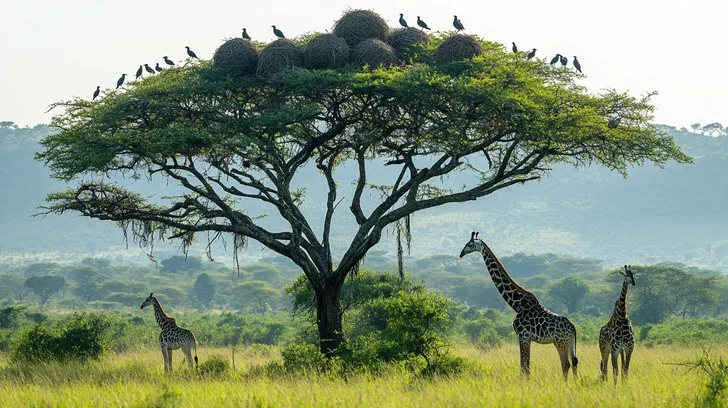
Acacia: The Umbrella-Shaped Tree That Defines the African Savanna

Common Name(s):
Acacia, Thorn Tree, Umbrella Thorn, Fever Tree (for some species), Whistling Thorn
Scientific Name:
Vachellia / Senegalia spp. (formerly all Acacia; iconic African species include Vachellia tortilis – Umbrella Thorn, Senegalia mellifera – Black Thorn)
Plant Type:
Deciduous or semi-evergreen tree/shrub
Family:
Fabaceae (legume family)
Origin and Endemism:
Hundreds of species native to Africa; the classic “umbrella” acacias are almost exclusively African (a few in Australia/Asia, but the savanna icons are African).
Natural Distribution:
Widespread across sub-Saharan Africa, from the Sahel south to South Africa. Dominant in East African savannas (Kenya, Tanzania) and Southern Africa (Namibia, Botswana, Zimbabwe).
Habitat & Growing Conditions:
Thrives in hot, dry savannas, grasslands, and semi-arid woodlands with 250–1,000 mm annual rainfall. Deep roots access groundwater; tolerates poor soils and drought. Often forms open “acacia woodland” landscapes.
Physical Description:
Classic flat-topped “umbrella” shape (10–20 m tall, wide spreading crown for shade). Grey-green bark, paired long white thorns (up to 10 cm) for defense. Feathery bipinnate leaves (fine, fern-like). Bright yellow puff-ball flowers in clusters; long flat pods with seeds.
Ecological Role:
Keystone genus shaping savanna ecosystems. Provides food (leaves for giraffes/elephants, nectar for bees/birds, pods for antelopes), shade, and nesting sites. Some species host ants in swollen thorns (mutual defense). Nitrogen-fixing roots enrich soil; vital for wildlife corridors.
Reproduction & Lifespan:
Flowers seasonally (rainy period); pollinated by insects. Pods wind/animal dispersed. Fire-resistant; resprouts after burns. Lifespan 30–150 years depending on species.

Human Uses & Cultural Significance:
Wood for fuel/furniture, gum arabic (from some species) for food/industry, bark for tannins/medicine (fever treatment). Thorns used traditionally for needles/piercings. Icon of African landscapes—symbolizes the “classic safari” view.
Conservation Status and Threats:
Many species Least Concern, but local declines from overgrazing, charcoal production, farmland clearing, and invasive pests. Climate change affects regeneration.
Fun Facts / Did You Know?
- Giraffes eat leaves despite thorns—using their 45 cm tongue to strip around them.
- Some acacias “whistle” in wind through ant-hollowed thorns.
- Yellow flowers produce abundant pollen—key honey source.
- The flat crown creates the postcard-perfect African sunset silhouette.
- Elephants push over trees for easier browsing, shaping the landscape.
Best Places to See It in the Wild:
Serengeti National Park & Ngorongoro Crater (Tanzania), Maasai Mara (Kenya), Etosha National Park (Namibia), Kruger National Park (South Africa), Amboseli National Park (Kenya – with Kilimanjaro backdrop).