Contribuer au contenu ou vous faire connaître à l’Afrique et sa diaspora ? Contactez-nous ! Want to contribute content or promote yourself to Africa and its diaspora? Contact us!
Hammerhead Bat: Africa’s Flying Fox with a Hammer-Shaped Head and Fruit-Eating Habits

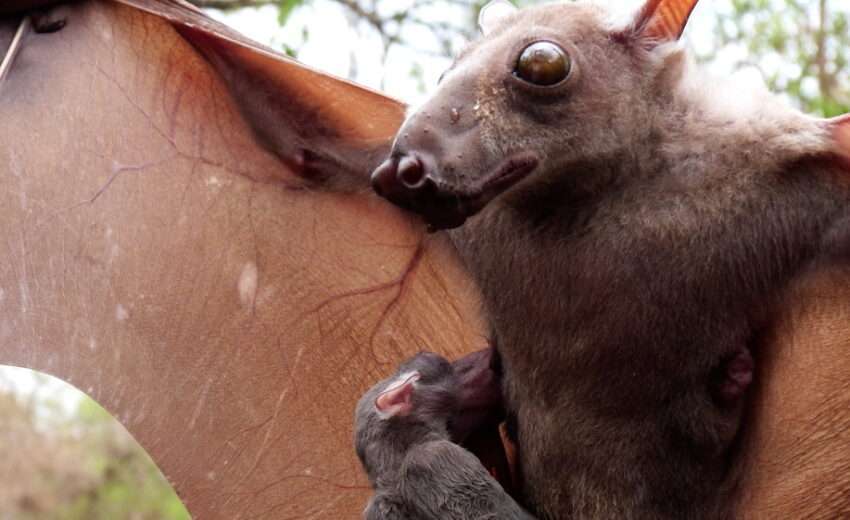
Common Name(s): Hammerhead Bat, Hammer-Headed Bat, Hammer-Headed Fruit Bat, Big-Lipped Bat
Scientific Name: Hypsignathus monstrosus
Type: Mammal – Megabat (Pteropodidae family) – Frugivore (fruit-eater)
Origin and Distribution: Endemic to the lowland rainforests and riverine forests of West and Central Africa, from Senegal and Gambia east to Uganda and western Kenya, and south to northern Angola and northwestern Zambia.
Habitat: Dense tropical rainforests, mangroves, river valleys, and swampy areas near fruiting trees. Roosts in tall trees during the day; highly mobile at night in search of figs and other fruits.
Physical Description: Largest bat in continental Africa: wingspan up to 1 m, weight 200–450 g (males larger). Males have bizarre elongated, box-like muzzle resembling a hammer or horse head, with pendulous lips and inflated cheek pouches used for vocalizing. Females smaller with fox-like faces. Fur grey-brown; large eyes for low-light vision.
History and Cultural Significance: Discovered in the 19th century; scientific name “monstrosus” reflects its unusual appearance. In local folklore, sometimes feared or revered as a forest spirit. Now studied for extreme sexual dimorphism and lekking behavior (males display in groups).
Behavior and Lifestyle: Nocturnal; males gather in leks (display areas) to produce loud, honking calls to attract females—resembles a chorus of deep croaks or barks. Females fly in to choose mates. Diet: primarily figs, guavas, bananas, mangoes; can eat up to 2x body weight in fruit nightly. Roosts in colonies of dozens to hundreds; excellent fliers.
Conservation Status and Threats: Least Concern (IUCN), but declining in some areas. Threats: habitat loss (deforestation), hunting for bushmeat (especially in West Africa), and persecution (seen as crop raiders or disease carriers). Protected in some national parks.
Fun Facts / Did You Know?
• Males have a hammer-shaped head with inflatable larynx and cheek pouches—used to amplify booming calls up to 100 dB (like a loud motorcycle).
• Extreme sexual dimorphism: males twice the size of females with grotesque features; females look like typical fruit bats. • One of the few bats that forms leks (like birds of paradise) for mating displays.
• Can fly long distances (up to 10 km) to find fruiting trees.
• Not dangerous—vegetarian, no echolocation like microbats.
Best Places to See It in the Wild: Lopé National Park (Gabon), Kibale Forest (Uganda), Taï National Park (Ivory Coast), Odzala-Kokoua National Park (Republic of Congo), with guided night walks in fruiting seasons.