
Contribuer au contenu ou vous faire connaître à l’Afrique et sa diaspora ? Contactez-nous ! Want to contribute content or promote yourself to Africa and its diaspora? Contact us!
Regional Cooperation in Action: The Power of the LHWP Partnership

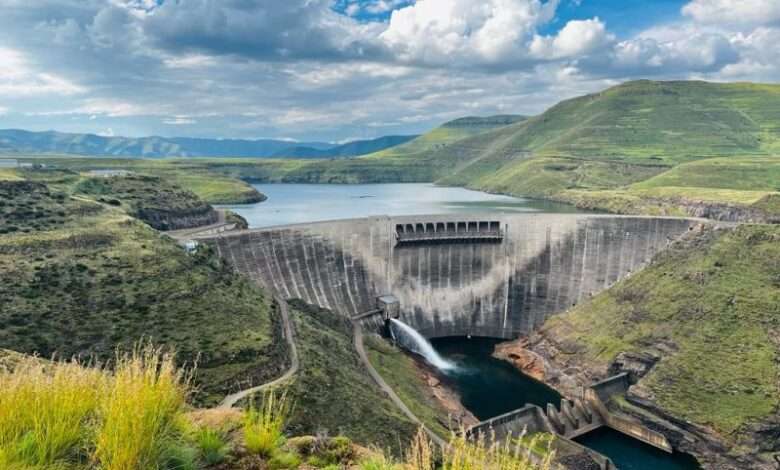
The Lesotho Highlands Water Project (LHWP) is widely regarded as a benchmark for regional integration in Southern Africa. Authored by David Jacobs, Chief Director at the GCIS, this analysis highlights how a 1986 treaty between South Africa and Lesotho has evolved into a sophisticated binational partnership that addresses the critical needs of both nations.
Rather than a simple purchase agreement, the LHWP is a shared infrastructure venture designed to provide water security for South Africa’s economic hub while catalyzing industrial and social development in Lesotho.
Phase I: The Foundation of Resilience
Completed in 2003, Phase I established the project’s viability and continues to provide substantial daily benefits:
- Water Transfer: South Africa receives 780 million cubic metres of water annually.
- Cost Efficiency: Because the system uses gravity-fed transfers, it significantly reduces the energy costs typically associated with large-scale water pumping.
- Lesotho’s Gains: The ’Muela Hydropower Station provides Lesotho with domestic electricity, reducing its dependence on imported energy, while water royalties provide a steady stream of national revenue.
Phase II: Expanding the Vision
As South Africa’s water demand grows, Phase II—currently under construction—is set to nearly double the system’s capacity:
- Infrastructure Upgrades: The core of this phase includes the Polihali Dam and a new 38-kilometre transfer tunnel connecting to the Katse Reservoir.
- Increased Volume: Annual transfers will rise to 1,270 million cubic metres.
- Legacy Assets: Beyond the dam itself, the project includes “enabling infrastructure” like the Senqu Bridge, which preserves community connectivity and supports the local tourism and transport sectors.
Beyond Water: A Model for SADC
According to David Jacobs, the LHWP’s true value lies in its demonstration of binational governance. By utilizing shared institutions and transparent frameworks, the project minimizes the potential for “water wars” and instead fosters a climate of mutual trust.
- Socio-Economic Unlocking: The project has become a primary driver for skills transfer and job creation in the Mokhotlong District and surrounding regions.
- Shared Responsibility: The LHWP proves that complex transboundary challenges are best solved through collaboration rather than unilateral action.
As the LHWP approaches four decades of operation, it remains a primary example of how the Southern African Development Community (SADC) can leverage shared natural resources to build a more integrated and sustainable future for the entire region.


