Contribuer au contenu ou vous faire connaître à l’Afrique et sa diaspora ? Contactez-nous ! Want to contribute content or promote yourself to Africa and its diaspora? Contact us!
Nigeria Unveils $200 Billion Triple-Infrastructure Mega-Project

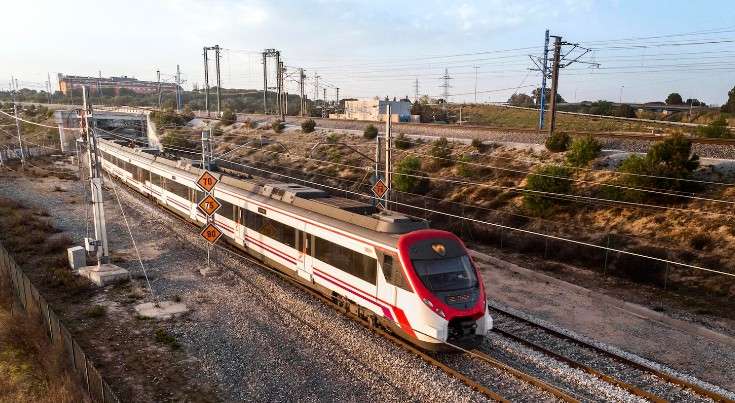
A Revolutionary Integrated Model
The Secretary to the Government of the Federation, Sen. George Akume, has officially inaugurated a high-level technical committee to review a massive $200 billion proposal: the Integrated Gas, Power, and High-Speed Rail Project.
This multi-phase initiative is designed to solve three of Nigeria’s most pressing infrastructure challenges simultaneously, positioning the nation as a dominant force in African energy and transportation.
The Three Pillars of the Proposal
The project, proposed by De-Sadel Nigeria Limited, rests on an integrated framework where each component supports the other:
- High-Speed Rail: A 4,000-kilometre dual-track network connecting all 36 states and the Federal Capital Territory (FCT). The first phase will link the major economic hubs of Lagos, Abuja, Kano, and Port Harcourt, cutting inter-city travel time by an estimated 75%.
- Dedicated Power Generation: The project includes the generation of 3,500 megawatts (MW) of electricity specifically to drive the high-speed rail system, ensuring the transport network remains independent of the national grid’s current limitations.
- Gas Development: Leveraging Nigeria’s vast natural gas reserves to fuel the power plants, creating a sustainable and locally-sourced energy loop.
The Mandate: Due Diligence and Governance
Given the unprecedented scale of the $200 billion investment, the SGF has tasked a diverse Technical Committee with a rigorous review process. Their mandate includes:
- Verification: Validating all claims made by the project proponents (De-Sadel Nigeria Limited).
- Technical & Environmental Review: Assessing the feasibility of a 4,000km network and its impact on Nigeria’s diverse ecosystems.
- Legal & Financial Oversight: Reviewing documentation to ensure compliance with international best practices and assessing the implications for national debt and sovereignty.
A Powerhouse Committee
The committee’s membership reflects the strategic importance of the project, cutting across security, finance, and regulation:
- Policy & Finance: Permanent Secretaries from Finance, Transportation, Petroleum, and the Central Bank of Nigeria (CBN).
- Regulation: The ICRC (Infrastructure Concession), NERC (Electricity), and NCC (Communications).
- Security & Intelligence: The EFCC, NFIU, NIA, DSS, and the Office of the National Security Adviser (ONSA) to ensure financial transparency and national security.
Strategic Impact: National Integration
If approved and executed, this project would represent the largest infrastructure investment in Nigeria’s history. Beyond the physical tracks, the SGF emphasized that the project is a tool for national integration, deepening the links between the North and South and providing the industrial backbone needed to stimulate long-term economic growth.