Contribuer au contenu ou vous faire connaître à l’Afrique et sa diaspora ? Contactez-nous ! Want to contribute content or promote yourself to Africa and its diaspora? Contact us!
Faso Mêbo: Burkina Faso’s Bold Vision for Self-Reliant Development

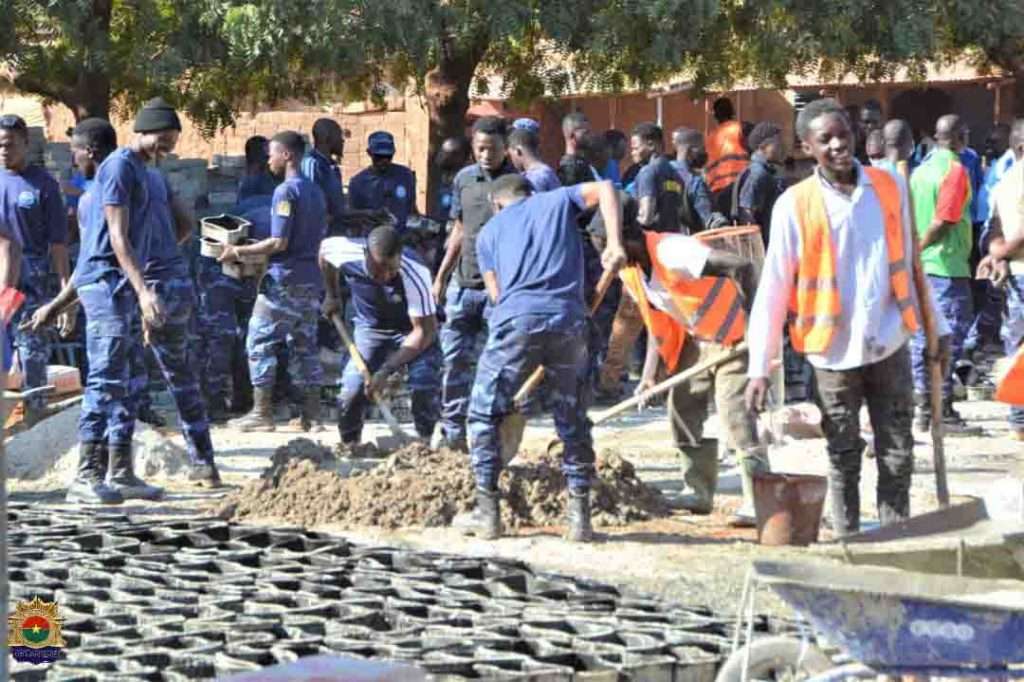
In October 2024, Burkina Faso launched an ambitious initiative that would transform how the nation approaches development. Under the leadership of President Captain Ibrahim Traoré, the “Faso Mêbo” presidential initiative represents far more than a public works program—it’s a call for national solidarity and a testament to what a country can achieve when its citizens unite behind a common vision.
What Does “Faso Mêbo” Mean?
The name itself captures the spirit of the initiative. Combining words from Burkina Faso’s national languages—Mooré and Dioula—”Faso Mêbo” translates to “Build the Country” or “Let’s Build the Nation.” This simple yet powerful phrase encapsulates the collaborative approach at the heart of the program, where every citizen is invited to participate in shaping their nation’s future.
The Challenge: A Nation in Need of Infrastructure
Burkina Faso faced a daunting reality: of the country’s 15,000 kilometers of roads, only about 4,000 were paved. Traditional approaches using private contractors would cost between 500 million and 1 billion CFA francs per kilometer—an astronomical sum for a developing nation facing security challenges and limited external financing options.
Rather than accept these constraints, the Traoré administration chose to reimagine the entire approach to development. The government invested approximately 200 billion CFA francs in purchasing over 1,000 machines—bulldozers, cement mixers, graders, and flatbeds—funded entirely through national resources.
Two Pillars of Development
The Faso Mêbo initiative rests on two main components:
Infrastructure Development: The program aims to construct road infrastructure through special “road brigades” working at reduced costs, with the ambitious goal of paving 3,000 to 5,000 kilometers annually. This focus on rural arteries addresses the critical need to reduce isolation and improve connectivity across the nation.
Urban Beautification and Planning: The second pillar emphasizes improving urban environments through paving projects, creating sidewalks and green spaces, developing housing, and implementing sanitation improvements. The pilot phase began in Ouagadougou, with work on major thoroughfares including Avenue du Burkina, the Thomas Sankara Memorial, and Avenue Guillaume Ouédraogo.
A Movement Built on Citizen Participation
What truly distinguishes Faso Mêbo from conventional development programs is its grassroots approach. The initiative actively encourages contributions from all Burkinabè citizens through donations of materials like cement, granite, and tools, financial contributions, and volunteer labor on construction sites.
The response has been remarkable. Ministry employees, students, retirees, and workers from all sectors have mobilized to support the initiative. In one striking example, the Ministry of Energy, Mines and Careers contributed 17 million CFA francs, along with cement, granite, and solar street lamps, with ministry personnel personally participating in paving work.
Perhaps most moving are the contributions from Burkina Faso’s youth. In Kaya, 118 children aged 7 to 15 sacrificed portions of their pocket money to purchase five bags of cement for the project. Schoolchildren across the country have voluntarily joined construction crews during their breaks, choosing nation-building over vacation.
Women’s organizations have also played a vital role. The Women’s Federation for World Peace in Bobo-Dioulasso donated 10 bags of cement and sent 15 members to actively participate in paving stone manufacturing, demonstrating both solidarity with the government’s vision and their commitment to community development.
Expanding Across the Nation
Following its successful pilot phase in Ouagadougou, Faso Mêbo has expanded to other regions of Burkina Faso. Regional launches have taken place in Bankui and Sourou, with ceremonies in Boromo and Dédougou mobilizing local contributions. Plans include developing 30 kilometers of urban roads in Bobo-Dioulasso and Koudougou, alongside continued expansion in the capital.
The financial mobilization has been equally impressive. As of early January 2026, over $354,000 has been raised for the initiative, with the leading contributions coming from the Kadiogo region ($78,000), Bankui ($29,000), and Guiriko ($23,000). The government continues to call on citizens, the diaspora, and economic stakeholders to strengthen this collective effort.
More Than Infrastructure: Building National Cohesion
Government officials emphasize that Faso Mêbo achieves multiple objectives beyond physical infrastructure. The initiative strengthens social cohesion through collective participation, improves quality of life in urban and rural areas, promotes the use of local resources and expertise, stimulates the local economy through large-scale procurement and employment, and demonstrates the viability of self-reliant development models.
A Blueprint for African Self-Determination?
The initiative has attracted international attention, with observers noting the contrast between Burkina Faso’s approach and the development loan model that has dominated much of Africa. By financing infrastructure through national resources and citizen participation, Burkina Faso is writing a different narrative—one of self-determination and collective action.
Whether Faso Mêbo can maintain its momentum and achieve its ambitious goals remains to be seen. The scale is staggering: thousands of kilometers to pave, urban centers to revitalize, and infrastructure that must serve generations. Success requires sustained unity, disciplined execution, and preservation of the revolutionary spirit that launched the initiative.
Looking Forward
The Faso Mêbo initiative represents a fundamental reimagining of development in Burkina Faso. It rejects dependency in favor of self-reliance, replaces passive waiting with active participation, and transforms citizens from beneficiaries into builders of their nation’s future.
In the words of one observer, “Some revolutions are fought with bullets. Faso Mêbo’s revolution is fought with graders, cement mixers, and human hands—hands that refuse to be idle while their nation waits.”
As Burkina Faso continues to build, pave, and beautify under the Faso Mêbo banner, the world is watching. The question is no longer whether such an approach is possible, but whether other nations will find inspiration in Burkina Faso’s example of what a determined people can achieve when they choose to build their nation together.