Contribuer au contenu ou vous faire connaître à l’Afrique et sa diaspora ? Contactez-nous ! Want to contribute content or promote yourself to Africa and its diaspora? Contact us!
Ethiopia’s Bold Move: Printing Currency Locally for Economic Sovereignty

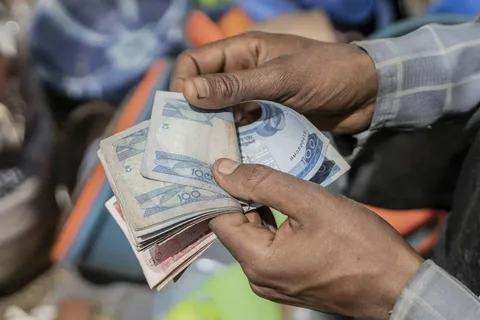
In a significant policy shift announced in mid-January 2025, Ethiopia has revealed plans to begin printing its own currency domestically, marking a major step toward economic independence and self-sufficiency. Prime Minister Abiy Ahmed unveiled this initiative at the Finance Forward Ethiopia 2026 Conference, signaling the nation’s intent to reduce reliance on foreign banknote producers and strengthen control over its monetary operations.
Breaking Decades of Dependence
For years, Ethiopia has outsourced the production of its currency, the birr, to foreign printing companies. According to industry reports, the country has primarily relied on British firm De La Rue and other European and North American contractors to print its banknotes. This practice, while common across Africa, exposes countries to various risks including logistical delays, security concerns, and higher long-term costs.
The new initiative will be led by Ethiopian Investment Holdings (EIH), the government’s state-owned asset manager that currently oversees more than 40 enterprises across key sectors. Prime Minister Abiy emphasized that domestic currency printing represents just one of several strategic capabilities the government aims to develop under public ownership.
Part of a Broader Economic Strategy
The currency printing initiative doesn’t stand alone. It forms part of an ambitious economic transformation plan that includes several complementary projects. EIH is also constructing Ethiopia’s first large-scale gold refinery, which the Prime Minister noted will be completed in the coming months. This facility will allow Ethiopia to process and add value to its gold exports rather than selling raw materials, a practice that has long cost the nation potential revenue and economic benefits.
Additionally, EIH has entered into partnerships with cryptocurrency mining firms, positioning Ethiopia to participate in the digital economy while leveraging its resources. The Prime Minister projects that EIH’s contribution to Ethiopia’s gross domestic product will reach 20 percent by 2030, positioning the holding company as a cornerstone of the nation’s economy.
Why This Matters
The decision to print currency locally offers several strategic advantages. First, it enhances security and sovereignty over one of the most critical functions of any nation-state. Control over currency production means Ethiopia can better protect against counterfeiting and maintain tighter oversight of monetary supply.
Second, while the initial investment in printing infrastructure may be substantial, domestic production promises lower long-term costs compared to continually contracting foreign firms. It also eliminates dependencies on international logistics chains and reduces vulnerabilities to external disruptions.
Third, this move aligns with Ethiopia’s broader push for economic self-determination. The country has faced significant economic challenges in recent years, including high inflation rates and foreign currency shortages. Building domestic capabilities represents a proactive approach to managing these challenges and reducing external dependencies.
Joining an Exclusive Club
If successfully implemented, Ethiopia will join a small but growing group of African nations with domestic currency printing capabilities. Currently, only an estimated nine to twelve African countries print their own currency, including Nigeria, South Africa, Egypt, Morocco, Algeria, Kenya, Sudan, Zimbabwe, and the Democratic Republic of Congo. For a continent of 54 countries, this represents a significant gap in economic infrastructure.
Ethiopia’s move could inspire other nations to pursue similar initiatives, potentially catalyzing a broader shift toward monetary sovereignty across Africa.
Historical Context
Ethiopia’s relationship with currency has deep historical roots. The country has used various forms of money throughout its history, from the Maria Theresa thaler in the 18th and 19th centuries to the introduction of its own coinage under Emperor Menelik II in the 1890s. The modern Ethiopian birr emerged in the early 20th century, and the country has periodically updated its banknotes to combat counterfeiting and illegal activities.
Most recently, in 2020, Ethiopia demonetized certain denominations and introduced new notes to address cash hoarding and illicit financial flows. That initiative, which cost approximately 3.7 billion birr to implement through foreign printing contracts, underscored both the expense and the importance of currency management.
Challenges Ahead
Despite the promising aspects of this initiative, Ethiopia will face significant challenges in implementation. Establishing a currency printing facility requires substantial capital investment, specialized technology, highly trained personnel, and robust security infrastructure. The country will need to develop expertise in security printing, a highly specialized field with exacting standards.
Moreover, the success of this venture depends on careful planning and execution. Any missteps in currency production could undermine public confidence in the birr and create economic instability.
A Symbol of Sovereignty
Beyond the practical economics, Ethiopia’s decision to print its own currency carries symbolic weight. For a nation with a proud history of independence, having once been the only African country never colonized (except for a brief Italian occupation), controlling currency production represents another assertion of sovereignty in an increasingly interconnected but often unequal global economy.
As Prime Minister Abiy noted, the Ethiopian Investment Holdings will develop many strategic capabilities, describing them as essential national assets. Currency printing sits alongside gold refining and other critical functions as pillars of economic self-sufficiency.
Looking Forward
The timeline for establishing domestic currency printing capacity remains to be fully detailed, but the announcement signals clear intent and commitment. As Ethiopia works toward this goal, the international community will be watching closely. Success could provide a model for other developing nations seeking greater control over their economic infrastructure.
For Ethiopia, a country of over 120 million people and Africa’s second-most populous nation, the ability to print its own currency represents more than a technical capability. It symbolizes a determination to chart its own economic course, build resilient national institutions, and secure greater independence in managing its monetary future.
As this initiative unfolds alongside the gold refinery project and other economic reforms, Ethiopia is positioning itself not just to participate in the global economy, but to do so on terms that prioritize national interests and long-term sustainability. Whether this bold gambit succeeds will depend on execution, but the vision is unmistakably clear: an Ethiopia that controls its own economic destiny.