
Contribuer au contenu ou vous faire connaître à l’Afrique et sa diaspora ? Contactez-nous ! Want to contribute content or promote yourself to Africa and its diaspora? Contact us!
Africa’s Sporting Triumphs in 2025: A Year of Championships, Excellence, and Continental Pride

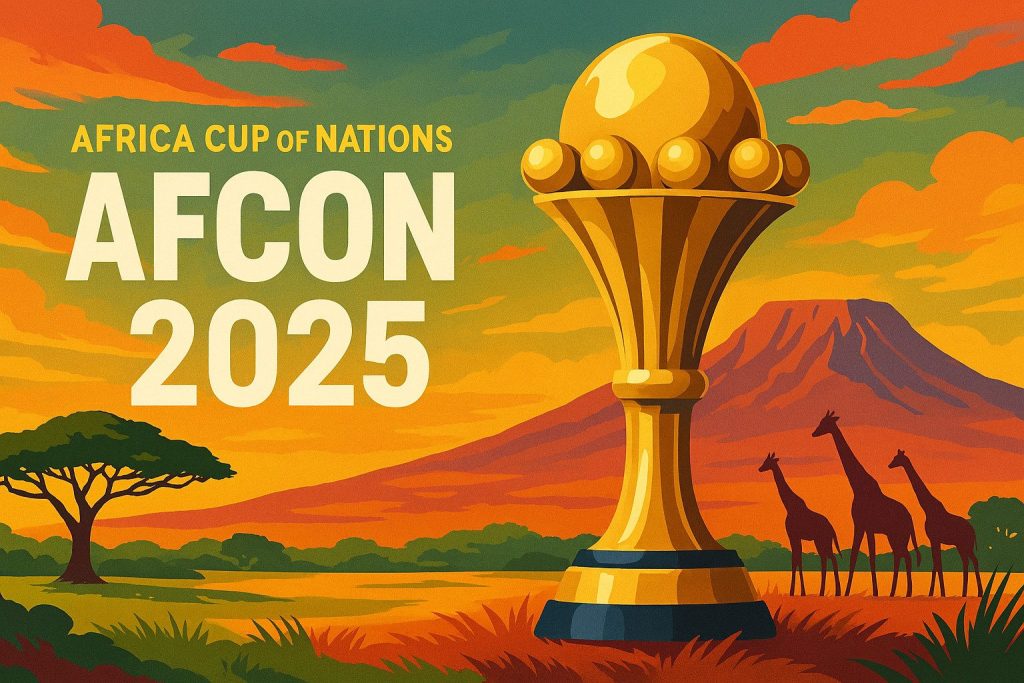
2025 has been a landmark year for African sports, delivering unforgettable moments, record-breaking performances, and showcasing the continent’s athletic talent on the world stage. From the historic shift in AFCON’s scheduling to groundbreaking achievements in basketball, athletics, and emerging sports, Africa has demonstrated its growing dominance in global sports. Here’s a comprehensive look at the year’s defining sporting moments.
Football: The Undisputed King of African Sports
AFCON 2025: A Historic Tournament in Morocco
The Africa Cup of Nations reached a historic milestone in 2025. Morocco hosted the 35th edition of AFCON across nine venues in six cities—the most ever for an AFCON, in a tournament that marked the first time AFCON took place over the Christmas and New Year period.
The schedule shift represented a seismic change in the continental calendar. Originally scheduled for June–July 2025, the tournament was pushed to the end of the year after FIFA introduced its expanded 32-team Club World Cup, creating unprecedented logistical challenges and labor negotiations with European clubs whose players would be absent during the holiday fixture congestion.
With pre-tournament favorites including Morocco, Egypt, Senegal, Ivory Coast, and other elite sides featuring high-profile players such as Mohamed Salah, Achraf Hakimi and Victor Osimhen, the tournament promised world-class football. Ivory Coast looked to defend the title they won in 2023, while Morocco, Egypt and Senegal were also among the pretournament favourites.
Morocco, the host nation, carried special significance. The country had not won AFCON since 1976, and Morocco’s squad is widely regarded as a golden generation and will be desperate to secure an AFCON title to cement that legacy. Team captain Achraf Hakimi, the reigning African Footballer of the Year, led a squad aiming to capture their second AFCON title ever.
Egypt’s Mohamed Salah remained central to the tournament narrative. Mohamed Salah’s (#10) Egypt are the most successful CAF team with seven AFCON titles. However, he has reached two finals (2017 and 2021) but lost both, and with Egypt already qualified for the World Cup, AFCON 2025 is widely seen as a last major opportunity for the 33-year-old Liverpool forward to secure the title that would cement his status as the country’s greatest-ever footballer.
Other Major Football Tournaments
Beyond AFCON, 2025 delivered a bumper year for African football. The eighth edition of the TotalEnergies CAF African Nations Championship was co-hosted by Kenya, Uganda and Tanzania, marking the first time multiple countries staged the prestigious event. This tournament featured domestic-based players only, showcasing local talent and club football excellence.
The TotalEnergies CAF U-20 Africa Cup of Nations in Cote d’Ivoire celebrated youth football and served as a qualifier for the 2025 FIFA U-20 World Cup, with the four semi-finalists advancing to the global finals. Senegal are the defending African champions after they lifted the trophy for the first time in 2023.
The continental club competitions also reached their crescendos. Africa’s elite club cup competition drew to a close for the 2024-25 season with the two-legged final to be played on 24 May and 1 June, 2025, while the TotalEnergies CAF Confederation Cup season culminated with the two-legged final staged on 17 and 25 May, 2025.
Beach Soccer’s Spectacular Emergence
In a historic first, Seychelles hosted the FIFA Beach Soccer World Cup in May, making it the first African country to do so, with the tournament ending on May 11, 2025. Senegal, the dominant beach football nation in Africa, clinched their second victory, and the tournament was set among turquoise waves and pristine shores, with a much beach party atmosphere and exciting finishes.
Women’s Football: A Rapidly Expanding Movement
WAFCON 2025: Morocco’s Double Honor
Morocco achieved a historic distinction in 2025. Morocco hosted the WAFCON 2025, making it the first African country to host both the men’s and women’s continental competitions in the same year, with the Women’s Africa Cup of Nations scheduled for July 5 – July 26, 2025.
The WAFCON will be attracting global interest since African teams performed exceptionally strong at the 2023 Women’s World Cup, with joining the host nation, Morocco, the defending champions, South Africa, Algeria, Ghana, Botswana, DR Congo, Tunisia, Senegal, Zambia, Tanzania, Mali, and Nigeria.
Basketball: Continental Growth and NBA Influence
FIBA AfroBasket 2025: Angola’s Fourth Edition
The FIBA AfroBasket, an African men’s basketball continental tournament, celebrated its 31st year in 2025, with Angola hosting the competition for the fourth time from August 12 to 24. Having won the competitions in 2017 and 2021, Tunisia was the two-time reigning champion.
Basketball Africa League: Growing Professional Excellence
The Basketball Africa League continued its transformation of African professional basketball. The fifth season of the Basketball Africa League (BAL) kicked off on April 5th 2025, with 12 teams competing across three conferences, Kalahari, Sahara, and Nile, in a 12-game group phase, with the finals taking place from 6-14 June. The BAL has revolutionised the African basketball scene with support from the NBA and FIBA, with twelve top club teams from nations like Angola, Rwanda, Egypt, Nigeria, and Tunisia competing in the 2025 season.
Athletics: Developing Tomorrow’s Champions
U20 Athletics Championships: Spotting Future Olympians
The U20 Athletics Championships, held from July 14 – July 18, 2025, featured high jumps, javelin throw, long jumps, shotput, and the 100 and 200-meter sprints, promising to showcase incredible young athletes from South Africa, Kenya and Nigeria.
The tournament places a strong emphasis on regional cooperation, sportsmanship, and talent development, with stars like David Rudisha and Caster Semenya having emerged from similar U20 competitions as a crucial stage for spotting future Olympians. These championships serve as essential laboratories for identifying and nurturing Africa’s next generation of global track and field talent.
Hockey and Emerging Sports
The Men’s Hockey Junior Africa Cup marked its 13th edition, while the Women’s tournament celebrated its 11th edition, with both tournaments hosted concurrently at Windhoek High School in Namibia, serving as qualifiers for the 2025 Junior World Cup.
Derna, Libya, hosted the fourth edition of the African Minifootball Cup from 16 to 25 April 2025, showcasing the continent’s appetite for diverse football formats.
Global Qualification and World Cup Preparation
African Teams Preparing for 2026 World Cup
A significant theme of 2025 was preparation for the 2026 FIFA World Cup in North America. Seven teams competing at AFCON 2025 – Algeria, Egypt, Ivory Coast, Morocco, Senegal, South Africa and Tunisia – have also qualified for the 2026 FIFA World Cup, meaning AFCON 2025 served as crucial preparation for these nations’ World Cup campaigns.
Morocco carried additional significance. AFCON 2025 will also serve as a test event for Morocco, which is set to co-host the FIFA World Cup 2030 alongside Portugal and Spain, making the tournament an important rehearsal for hosting football’s greatest spectacle.
African Players Dominating Global Leagues
Throughout 2025, African athletes continued their rise in global sports. Premier League stars Mohamed Salah, Bryan Mbeumo, Amad Diallo, Ismaila Sarr, Carlos Baleba, Dango Ouattara, Iliman Ndiaye, Pape Matar Sarr, Idrissa Gueye, Noussair Mazraoui, Alex Iwobi and Omar Marmoush were all expected to play key roles at the tournament, demonstrating Africa’s penetration into world football’s elite tier.
Notable Absences and Records
The 2025 tournaments also marked historic changes in African football’s landscape. Ghana, four-time African champions, failed to qualify after finishing bottom of the Group F, missing out on the Africa Cup of Nations for the first time since 2004—a shocking development that underscored how competitive African football had become.
Comoros, Gabon, Sudan and Zimbabwe made their return to the continental tournament after missing out on 2023, while Benin and Uganda made their return after an almost five-year absence from the event, highlighting both the cyclical nature of continental football and the emergence of competitive smaller nations.
The Broader Significance
The sporting calendar of 2025 revealed several crucial trends. First, African football’s commercial power continues expanding—the last tournament in Cote d’Ivoire broke several records, including for TV audiences, with 1.4 billion cumulative viewers globally, and the 2025 edition was set to be even bigger and better.
Second, the professionalization of African sports extends far beyond football. Basketball, athletics, beach sports, and emerging disciplines are attracting investment, broadcasting rights, and global partnerships, creating pathways for continental athletes to compete at the highest international levels.
Third, Africa’s hosting capacity continues improving. With Morocco managing the most complex AFCON ever, and other nations hosting continental competitions, the continent demonstrates its readiness to stage world-class sporting events that rival any international venue.
Looking Ahead: Momentum into 2026
As 2025 closes, African sports can claim a year of historic achievements. Young athletes earned their places on global stages through continental competitions. Professional leagues expanded their reach. Women’s football continued its explosive growth trajectory. And continental tournaments continued captivating global audiences, proving that African sports merit the world’s attention and investment.
The momentum built throughout 2025—from the beach soccer shores of Seychelles to the football stadiums of Morocco, from basketball courts in Pretoria to athletics tracks hosting future Olympians—suggests that Africa’s influence in global sports will only expand. The continent has shown that it possesses not only the talent, passion, and organizational capacity to excel in sports, but increasingly, the infrastructure and resources to shape global sporting narratives for years to come.


