Contribuer au contenu ou vous faire connaître à l’Afrique et sa diaspora ? Contactez-nous ! Want to contribute content or promote yourself to Africa and its diaspora? Contact us!
Ghana’s President Mahama Enacts Ten Reform Bills to Boost Economy, Support Farmers and Modernize Justice

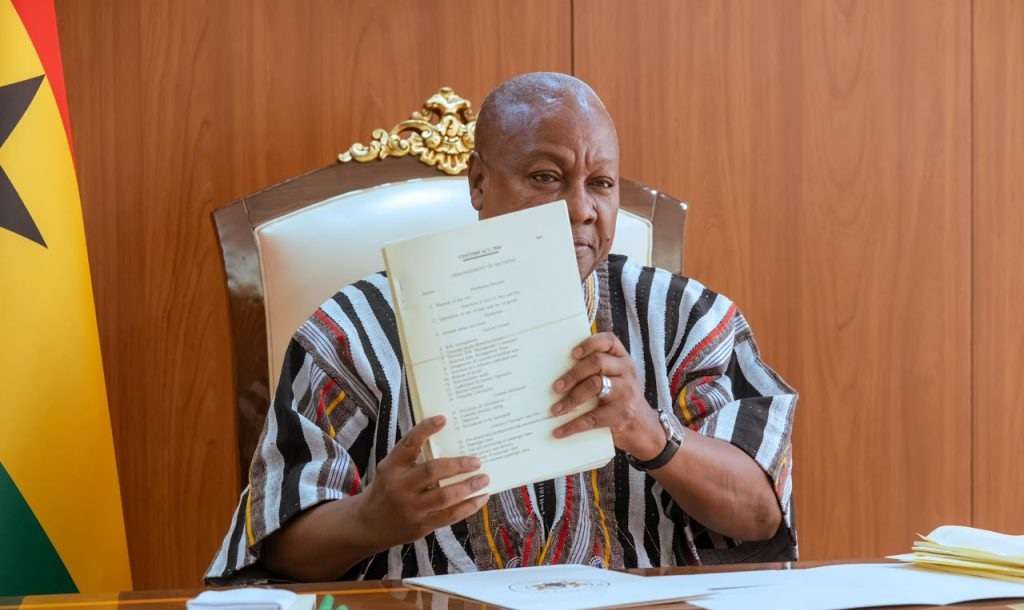
Accra – In a sweeping legislative push, President John Dramani Mahama signed ten new statutes into law on Thursday, a move he described as the cornerstone of his administration’s agenda to revitalize Ghana’s economy, tighten fiscal controls and overhaul the justice system.
Agricultural guarantees for cocoa growers
The most widely‑discussed bill is the Ghana Cocoa Board Act, 2026. By legally binding the state to process at least half of the nation’s cocoa beans locally and to pay farmers 70 % of the prevailing world price, the law seeks to curb the long‑standing revenue leakages that have plagued the sector. “I’m sure our cocoa farmers will be happy,” Mahama said after signing. “We have turned promises into law – local processing and fair prices are now guaranteed.”
Tax relief for low‑income earners
To shield the country’s most vulnerable workers, the Income Tax Amendment Act, 2026 eliminates income‑tax obligations for anyone earning the minimum wage or less. “Anyone on the minimum wage or below is exempt,” the President reiterated, emphasizing that the measure will increase disposable income for millions of Ghanaians.
Stimulating domestic manufacturing
The Excise Act, 2026 consolidates excise duties on imported goods such as alcohol and cigarettes while granting targeted exemptions to local producers. Notably, fruit‑juice manufacturers will no longer pay excise tax on their products, a provision aimed at encouraging value‑added processing within the country.
Streamlining customs and revenue collection
Three financial statutes were also signed:
- Customs Act, 2026 – merges decades of amendments into a single, coherent code, promising greater efficiency and the sealing of loopholes that have historically eroded customs revenue.
- Energy Sector Levies Amendment Act, 2026 – ends the widespread abuse of fuel‑oil exemptions by requiring upfront tax payments and verifiable proof for any reimbursement, particularly affecting factories and maritime operators.
- VAT Amendment Bill, 2026 – aligns value‑added tax administration with recent monetary‑policy reforms; gold mining firms that surrender 30 % of their output to the Bank of Ghana will be exempt from VAT on those quantities.
Reforming the penal and judicial landscape
The Community Service Act, 2026 introduces non‑custodial sentences for minor offences, allowing judges to order community‑service work instead of incarceration. Mahama highlighted the dual benefit of cutting prison overcrowding and saving taxpayer money.
Complementary legislation includes the Tribunals Act, 2026, which empowers the Chief Justice to set up regional tribunals for faster case handling, and the Maritime and Related Offences Act, 2026, which domesticates the United Nations Convention on the Law of the Sea (UNCLOS), giving Ghanaian authorities clearer jurisdiction over crimes in territorial waters.
Investing in defence education
Rounding out the package, the National Defence University Act, 2026 formally recognises the newly created military university as a fully accredited institution, enabling it to award recognised academic and strategic programmes.
In a brief address, President Mahama, flanked by Chief of Staff Julius Debrah, PhD, and senior ministers, framed the ten bills as the legal foundation for “sustainable national development.” He argued that the reforms collectively address revenue leakages, empower key sectors such as agriculture and manufacturing, and modernise the justice system – all essential ingredients for a more resilient Ghanaian economy.
Analysts note that while the legislation marks a significant policy shift, effective implementation will be critical. The success of the cocoa processing targets, for instance, hinges on private‑sector investment and infrastructure upgrades, while the tax exemptions will require robust administrative capacity to avoid new loopholes. Nonetheless, the comprehensive nature of the reforms signals a decisive step toward the President’s broader vision of inclusive growth and institutional modernization.