Contribuer au contenu ou vous faire connaître à l’Afrique et sa diaspora ? Contactez-nous ! Want to contribute content or promote yourself to Africa and its diaspora? Contact us!
Tanzania: The Rising Giant of East Africa – From Golden Hills to the Serengeti’s Treasure

Introduction: A Nation on the Move
Tanzania is a land of superlatives. It is home to Africa’s highest mountain (Kilimanjaro), its largest lake (Victoria), and one of its most famous wildlife spectacles (the Great Migration). But in 2025, this East African nation is making headlines for another reason: its economy.
Under the leadership of President Samia Suluhu Hassan, Tanzania’s economy expanded by 5.8 percent in 2025, up from 5.2 percent the previous year, driven by mining, agriculture, construction, and tourism . Inflation remained manageable at 3.4 percent, and foreign exchange reserves reached $6.6 billion—sufficient to cover more than five months of imports.
This article explores the multifaceted riches of Tanzania—from its gold-dominated mining sector undergoing rapid diversification, to its agricultural bounty that has achieved 128% food self-sufficiency, to its world-class tourism treasures and emerging role in the global energy transition.
1. Mineral Wealth: Gold Dominance and a Diversifying Future
Tanzania’s mining sector is closing in on a historic milestone. According to official data, the total value of minerals produced surged by 23 percent from $806.2 million in March 2025 to $991.1 million by September 2025 . The sector is a key source of foreign exchange and government revenue.
1.1. Gold: The Undisputed King
Gold accounts for more than 80 percent of Tanzania’s mineral export earnings, and its performance in 2025 has been extraordinary.
- Production Surge: Gold output rose from 9,538.5 kilograms in Q1 2025 to 10,573.7 kilograms by September.
- Value Increase: The value of gold produced jumped from $692.4 million in March to $878.3 million by September.
- Record Global Prices: This growth was supercharged by record-breaking global gold prices, which climbed from $2,709.69 per troy ounce in January to $3,667.68 by September 2025. The Bank of Tanzania reported that gold exports surged by 35.8 percent to $4.43 billion.
Benjamin Mchwampaka, Executive Secretary of the Tanzania Chamber of Mines, is optimistic about the future: “The price of gold continues to climb, establishing a favorable environment that will allow the sector’s positive trend to persist throughout the rest of the year and into 2026”.
1.2. The Diversification Story: New Minerals on the Rise
While gold dominates, exciting developments are underway in other minerals. According to the National Bureau of Statistics, several minerals saw explosive growth in Q4 2024:
| Mineral | Growth Rate (Q4 2024 vs Q4 2023) | Key Uses |
|---|---|---|
| Mica | 597% | Electrical insulation, construction |
| Copper ore | 308% | Wiring, plumbing, machinery |
| Kaolin | 177% | Paper, ceramics, pharmaceuticals |
| Bauxite | 109% | Primary source of aluminum |
| Phosphate | 109% | Fertilizer production |
| Feldspar | 105% | Ceramics, glass manufacturing |
| Pozzolana | 103% | Cement manufacturing, soil stabilization |
This mineral boom offers a critical opportunity for Tanzania to transition from exporting raw minerals to developing value-added industries, creating jobs and increasing government revenue.
Deputy Minister for Minerals, Dr Steven Kiruswa, highlighted the strategic importance: “Our research identifies high-potential minerals, and we attract investments through institutions like Stamico. The more we produce and sell, the more revenue we generate, which translates to more jobs and development”.
1.3. Diamonds: A Notable Comeback
Diamonds also made a strong return, with production rising from 93,557 carats in March 2025 to 111,125.8 carats in September—the highest level in more than two and a half years. The corresponding value increased from $15.7 million to $17.4 million, reflecting improved output at key mining sites after a period of operational disruptions.
1.4. Critical Minerals for the Energy Transition
Perhaps most significantly for the future, Tanzania is rapidly emerging as a key player in Africa’s energy transition. The country possesses rich deposits of graphite, nickel, and rare earth elements—minerals essential for the production of batteries, electric vehicles, and renewable energy technologies.
By focusing on the responsible extraction and processing of these critical minerals, Tanzania is positioning itself as a major supplier of materials for green technologies while fostering long-term economic growth and regional energy security.
1.5. Coal: A Mixed Picture
Coal output showed a mild decline over the same period, falling from 790,100 tonnes worth $98.1 million in March 2025 to 754,300 tonnes valued at $95.4 million by September. The drop was partly attributed to weaker export demand and falling global coal prices amid the global transition to renewable energy. However, domestic demand from cement factories and thermal plants remains steady.
1.6. Policy Reforms and Investor Confidence
The mining sector is watching eagerly as President Samia’s administration plans to review the tax regime for mining companies. The Chamber of Mines expects the review to bring “much-needed relief and unlock fresh investment opportunities”.
“We hope to see a stable, affordable, and predictable fiscal regime,” said Mr Mchwampaka. “Consistent and competitive tax policies are essential to attract new investors, unlock foreign direct investment, and boost long-term national revenue from Tanzania’s mineral wealth”.
2. Agricultural Wealth: The Backbone of the Nation
Agriculture employs more than 65 percent of Tanzanians and continues to be the backbone of rural livelihoods and food security. The sector contributed an estimated 23% of GDP in 2025, with exports reaching $2.9 billion in Q4 2024.
2.1. A Remarkable Achievement: 128% Food Self-Sufficiency
President Samia announced in late 2024 that Tanzania had achieved an extraordinary 128% food self-sufficiency and is now exporting surplus produce to neighboring countries. This positions Tanzania as a regional food basket and a model for agricultural transformation in Africa.
The government is now focusing on improving food quality, accessibility, affordability, and reducing post-harvest losses, which currently run at 30–40% for perishable crops due to inadequate cold-chain infrastructure.
2.2. Key Cash Crops Driving Exports
Tanzania’s traditional cash crops recorded impressive performance in 2024 :
- Coffee: Earnings jumped 41.38% year-on-year to $227.9 million
- Tobacco: Sales climbed 90.68% to $340.41 million
- Cotton: Strong price rallies boosted export revenues
- Cashew Nuts: Exports projected to inject $448 million by end of 2024, up from $216 million the previous year
Cashews are emerging as a dominant traditional cash crop, now the second-highest earning traditional crop after tobacco. Production increased to 408,000 tons from 310,000 tons, driven by global demand and initiatives by the Cashew nut Board of Tanzania (CBT) to expand cultivation into new areas.
2.3. Emerging Agricultural Exports
Exciting new products are opening fresh export corridors :
- Sunflower seed cake and chilies: Gaining traction in the Chinese market
- Avocados: Government-financed pack-houses are boosting shipments
- Horticulture: The fastest-growing segment with a 12% CAGR outlook to 2030
2.4. Government Investment and Policy Support
The Agricultural Sector Development Programme (ASDP) Phase II is channeling public finance into fertilizers, certified seed, and mechanization, directly reversing years of underinvestment . The revival of the Tanzania Fertilizer Company aims to stabilize input pricing.
The ruling CCM’s 2025–2030 manifesto commits to higher producer prices for cashews, coffee, and cotton, with priority spending on feeder-road upgrades, grain storage, and on-farm solar pumps.
International partners are also supporting the sector. In February 2025, Tanzania signed a $1.3 million financing agreement with Norway to support a three-year agricultural development program addressing regulatory barriers, expanding market access, and promoting sustainable farming.
2.5. Processing Revolution: From Raw to Value-Added
A significant shift is underway: Tanzania is expanding cashew nut processing to become a net exporter instead of sending raw nuts to Asia for processing, as is common in most African countries. This value addition strategy is critical for capturing more of the economic benefits domestically.
3. Tourism Wealth: Beyond the Serengeti
Tourism is one of Tanzania’s crown jewels, contributing substantially to foreign exchange earnings and employment. The sector recorded strong gains in 2025 with international arrivals rebounding following global travel recovery.
3.1. The Iconic Northern Circuit
The Northern Circuit remains Tanzania’s most visited region, home to world-famous attractions:
- Serengeti National Park: Host to the Great Migration, one of nature’s greatest spectacles
- Ngorongoro Crater: A UNESCO World Heritage site and one of the best places to see the Big Five
- Mount Kilimanjaro: Africa’s highest peak, drawing trekkers from around the world
- Lake Manyara and Tarangire: Rich in wildlife and birdlife
The Ngorongoro Conservation Area Authority (NCAA) launched a special year-end promotion in December 2025, “Merry and Wild: Ngorongoro Awaits,” aiming to achieve a revenue target of Sh350 billion in 2025/2026, building on a strong performance of Sh269.9 billion in 2024/2025.
The campaign offers discounted packages of up to 50 percent to encourage domestic tourism, recognizing that domestic visitor numbers remain relatively low compared to international arrivals.
3.2. The Western Tourism Circuit: Tanzania’s Untapped Frontier
Beyond the famous northern parks lies a hidden gem: Tanzania’s Western Tourism Circuit. This remote corridor—encompassing Gombe Stream, Mahale Mountains, Katavi, and Kigosi—offers pristine landscapes and rare wildlife encounters with virtually no crowds.
- Gombe Stream National Park: World-famous as the site of Dr. Jane Goodall’s chimpanzee research. This tiny rainforest park on Lake Tanganyika hosts one of Africa’s highest concentrations of primates, with guided jungle treks allowing visitors to follow habituated wild chimpanzees.
- Mahale Mountains National Park: Home to Tanzania’s largest population of wild chimpanzees. Towering forested peaks cascade to the lakeshore, blending mountainous and aquatic scenery. Chimp-tracking treks are combined with boat travel on the lake.
- Katavi National Park: Tanzania’s third-largest park, a vast, virtually undeveloped wilderness. Its flooded plains teem with the largest Cape buffalo herds on Earth, plus thousands of elephants, zebras, and hippos that engage in fierce territorial battles during the dry season.
- Kigosi National Park: Part of Tanzania’s great Western Wetlands, covering about 7,460 km² of floodplains, marshes, and rivers. It is a haven for water-loving wildlife and hosts more than 350 bird species.
The Western Circuit currently receives only a small fraction of visitors, meaning travelers can enjoy uncrowded, “off the beaten path” safari experiences while helping diversify Tanzania’s tourism economy.
3.3. Infrastructure and Accessibility
The Western Circuit’s beauty comes with a logistics challenge. These parks lie far from main highways and airports. Overland drives often take 10–13 hours from major cities, and airstrips currently serve only charter and private planes.
However, the Tanzania Association of Tour Operators (TATO) is actively promoting the circuit through advocacy for infrastructure upgrades, marketing campaigns, guide training, familiarization trips, and investment facilitation. The goal is to distribute visitors more evenly—currently nearly 80% of tourists concentrate in the Northern Circuit.
3.4. Responsible Tourism and Community Benefits
Responsible tourism underpins all development in the Western Circuit. Park regulations strictly limit off-road driving and group sizes. TATO’s guide trainings include modules on environmental stewardship and cultural sensitivity.
The aim is a high-value, low-volume model: attracting travelers who appreciate the extra cost of flying to remote parks in exchange for exclusive experiences, while ensuring revenue benefits local communities through jobs, village partnerships, and conservation funding.
4. Industrial Wealth: Manufacturing on the Rise
Tanzania’s manufacturing sector is posting remarkable progress under President Samia’s leadership.
4.1. Manufacturing Sector Growth
The manufacturing sector’s contribution to GDP rose to 7.3 percent in 2024, up from 7.0 percent in 2023, with annual growth reaching 4.8 percent compared to 4.3 percent previously . The trade sector also grew, contributing 8.6 percent to GDP.
4.2. Strategic Investments Driving Production
Minister for Industry and Trade, Dr Selemani Jafo, highlighted several strategic investments transforming the industrial landscape:
- Automotive Assembly: Factories hosted at the National Development Corporation assembled 3,445 vehicles by March 2025, following investments totaling over 112 billion shillings and creating hundreds of direct jobs. Saturn Corporation Limited alone can assemble 900 truck heads and 270 tippers per month.
- Sugar Production: The Mkulazi Sugar Factory has commenced operations with an annual production capacity of 30,000 tonnes. By March 2025, it had produced 19,124 tonnes, generating 2,172 direct jobs and over 8,000 indirect ones.
- Kilombero Sugar Factory expanded production from 132,000 to a projected 271,000 tonnes in 2025/26, backed by an investment of 570 billion shillings .
- Kagera Sugar Factory is on track to increase production to 170,000 tonnes, having already created 10,500 direct jobs and over 60,000 indirect ones.
4.3. Value Addition: The Critical Agenda
Development economists have long advocated for local processing as a means of converting Tanzania’s wealth into tangible national benefits. Associate Professor Abel Kinyondo of the University of Dar es Salaam argues that merely exporting raw resources has limited Tanzania’s economic gains over the past three decades.
“With gold, silver and tanzanite, we’ve experienced missed opportunities. For these emerging minerals, we must pursue full value addition. This means transitioning from extraction to processing and even manufacturing,” he emphasized.
Independent analyst Oscar Mkude added: “If we can process at least half of our minerals domestically, we’ll not only earn more but also create jobs and strengthen our industrial base. This aligns directly with the government’s Economic Transformation and Resilience agenda”.
5. Energy Wealth and the Green Transition
Tanzania is rapidly emerging as a key player in Africa’s energy transition, driven by abundant natural resources and a growing commitment to sustainable development.
5.1. Diversifying the Energy Mix
The country is focused on diversifying its energy mix by balancing petroleum and natural gas with renewable sources like hydropower. This balanced approach ensures energy security while reducing dependence on fossil fuels.
5.2. Critical Minerals for Global Green Tech
As noted earlier, Tanzania’s rich deposits of graphite, nickel, and rare earth elements are essential for the global clean energy revolution. These minerals are critical components in:
- Electric vehicle batteries
- Renewable energy storage systems
- Wind turbines and solar panels
- Consumer electronics
By positioning itself as a major contributor to global battery mineral supply chains, Tanzania is securing a place in the green economy of the future.
5.3. Rural Electrification Success
President Samia noted that Tanzania has achieved near-total rural electrification, with nearly all of its 12,300 villages now connected to electricity. This infrastructure investment is transforming rural economies, enabling agro-processing, small businesses, and improved quality of life.
6. The “Other” Riches: Tanzanite, Human Capital, and Strategic Position
6.1. Tanzanite: A Gemstone Like No Other
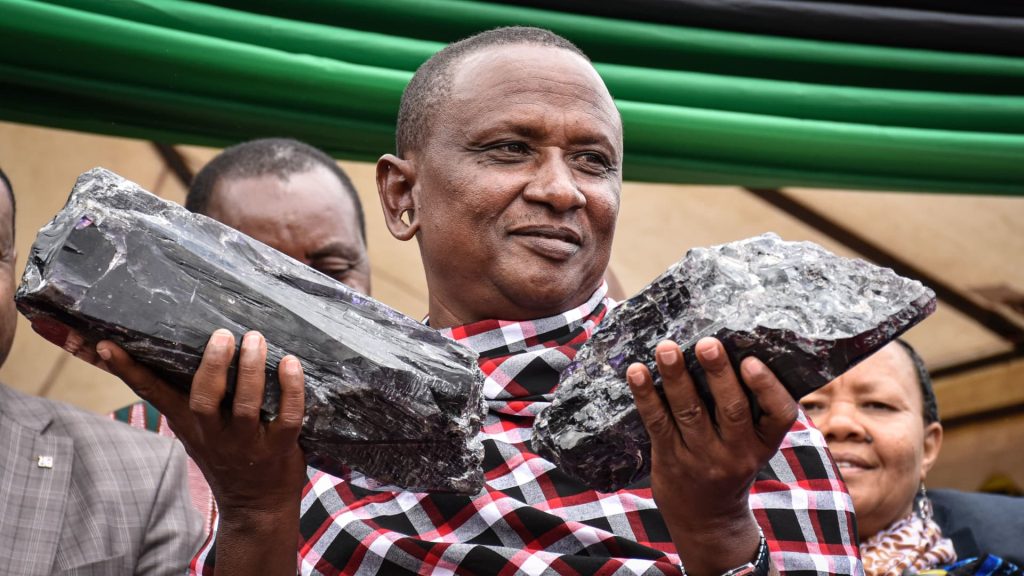
Tanzania is one of the world’s primary producers of tanzanite, a gemstone found only in the Mererani Hills near Mount Kilimanjaro. With growing global demand, tanzanite represents a unique and exclusive source of mineral wealth.
6.2. Human Capital and Demographic Dividend
With a population of approximately 67 million, Tanzania has a young and growing workforce. The government’s investments in education, vocational training, and industrial development are designed to harness this demographic dividend.
President Samia emphasized in her year-end address that sustaining growth requires “strong domestic production, private investment, and continued political stability”.
6.3. Strategic Regional Position
Tanzania’s location in East Africa, with major ports at Dar es Salaam and Tanga, positions it as a gateway to landlocked neighbors including Uganda, Rwanda, Burundi, Zambia, and the Democratic Republic of Congo. This strategic position underpins its trade and logistics potential.
7. Challenges and The Future: Building on Momentum
7.1. Infrastructure Gaps
Despite progress, significant challenges remain. Tanzania’s rural road density trails regional peers, leaving many villages reachable only during dry seasons. The World Bank places the investment gap for rural roads and cold-chain infrastructure at above $3 billion.
Perishable crops suffer 30–40% post-harvest losses, yet the country operates fewer than 50 cold stores compared with Kenya’s 7,000 . Addressing this gap is critical for horticulture’s growth trajectory.
7.2. Climate Volatility
Volatile rainfall and increased El Niño frequency pose risks to agriculture. Climate-smart irrigation funding, including support from the Green Climate Fund, is helping build resilience.
7.3. Processing Capacity
While progress is being made in cashew processing and other areas, sub-scale local processing capacity for many commodities remains a constraint. The government’s focus on value addition through industrial development directly addresses this challenge.
7.4. Policy and Regulatory Environment
The mining sector is hopeful that the planned review of the tax regime will bring “a stable, affordable, and predictable fiscal regime” to attract new investment. Consistent and competitive policies are essential for unlocking long-term potential.
7.5. A Sustainable Future
Tanzania is integrating Environmental, Social, and Governance (ESG) practices to ensure responsible mining and energy development, aiming for long-term economic growth and regional energy security . This commitment to sustainability positions Tanzania favorably for international investment and partnerships.
Conclusion: The Giant Awakens
Tanzania in 2025 is a nation on the move. Its economy is growing at nearly 6%, inflation is low, reserves are strong, and key sectors are firing on all cylinders . The mining sector is approaching a $1 billion quarterly milestone, driven by record gold prices and exciting diversification into critical minerals for the green transition . Agriculture has achieved an extraordinary 128% food self-sufficiency, positioning Tanzania as a regional food basket . Tourism is recovering strongly, with ambitious plans to develop the Western Circuit and spread benefits more evenly.
Under President Samia Suluhu Hassan, the government is pursuing strategic investments, policy reforms, and international partnerships to unlock the country’s immense potential. The focus on value addition—processing minerals locally, manufacturing goods, and moving up the agricultural value chain—promises to create jobs, increase revenues, and build a more resilient economy.
As Benjamin Mchwampaka of the Tanzania Chamber of Mines noted, the positive trends are “not an anomaly but a sustainable trajectory”. For investors, travelers, and observers, Tanzania is a country to watch closely. The giant of East Africa is awakening, and its best days lie ahead.